🚪 学习前导 · 先看这里再开始
🎯 学完你能干什么
- 能比较 固体 / 液体 / 气体在形状、体积、流动性、可压缩性上的区别
- 能用 密度 ρ = m / V 排序常见物质
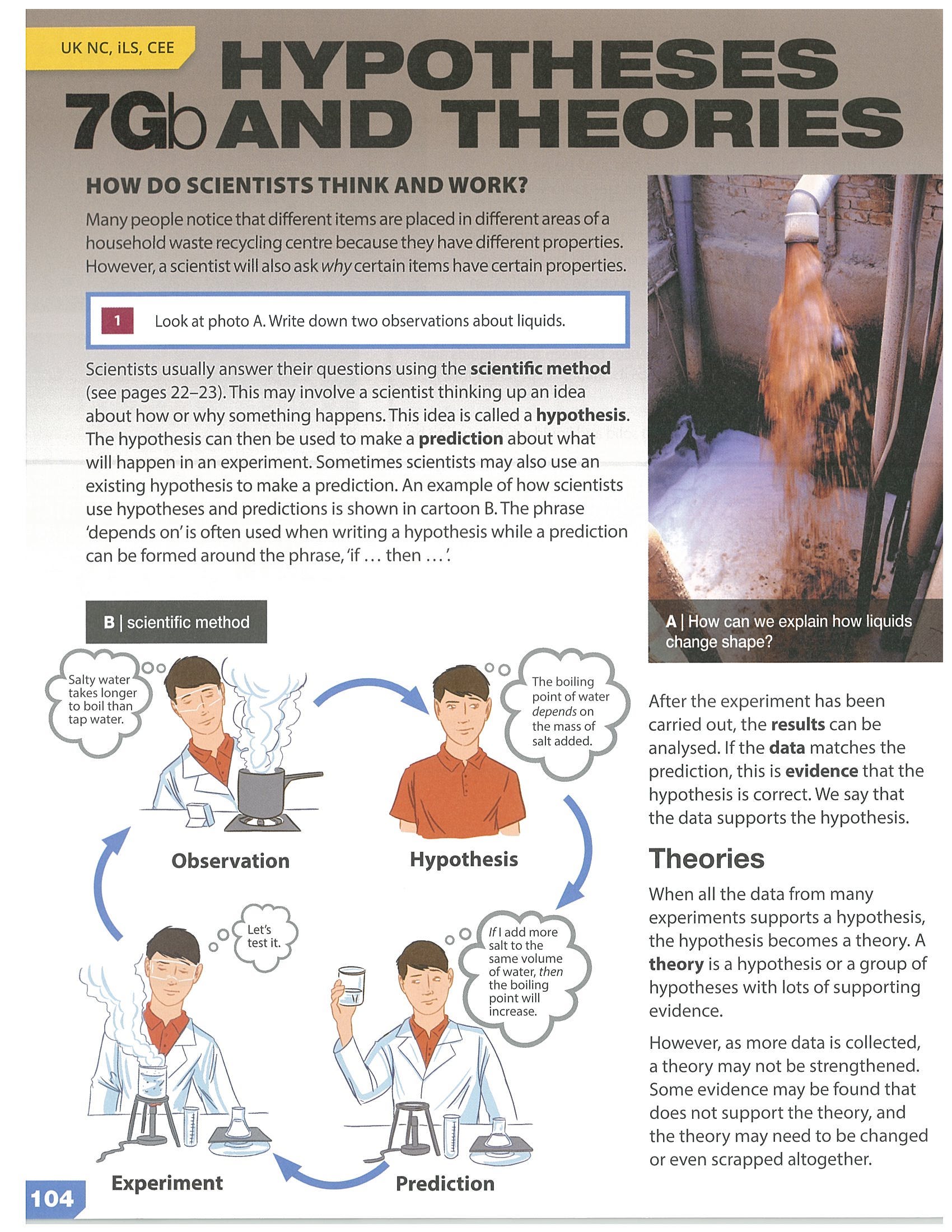
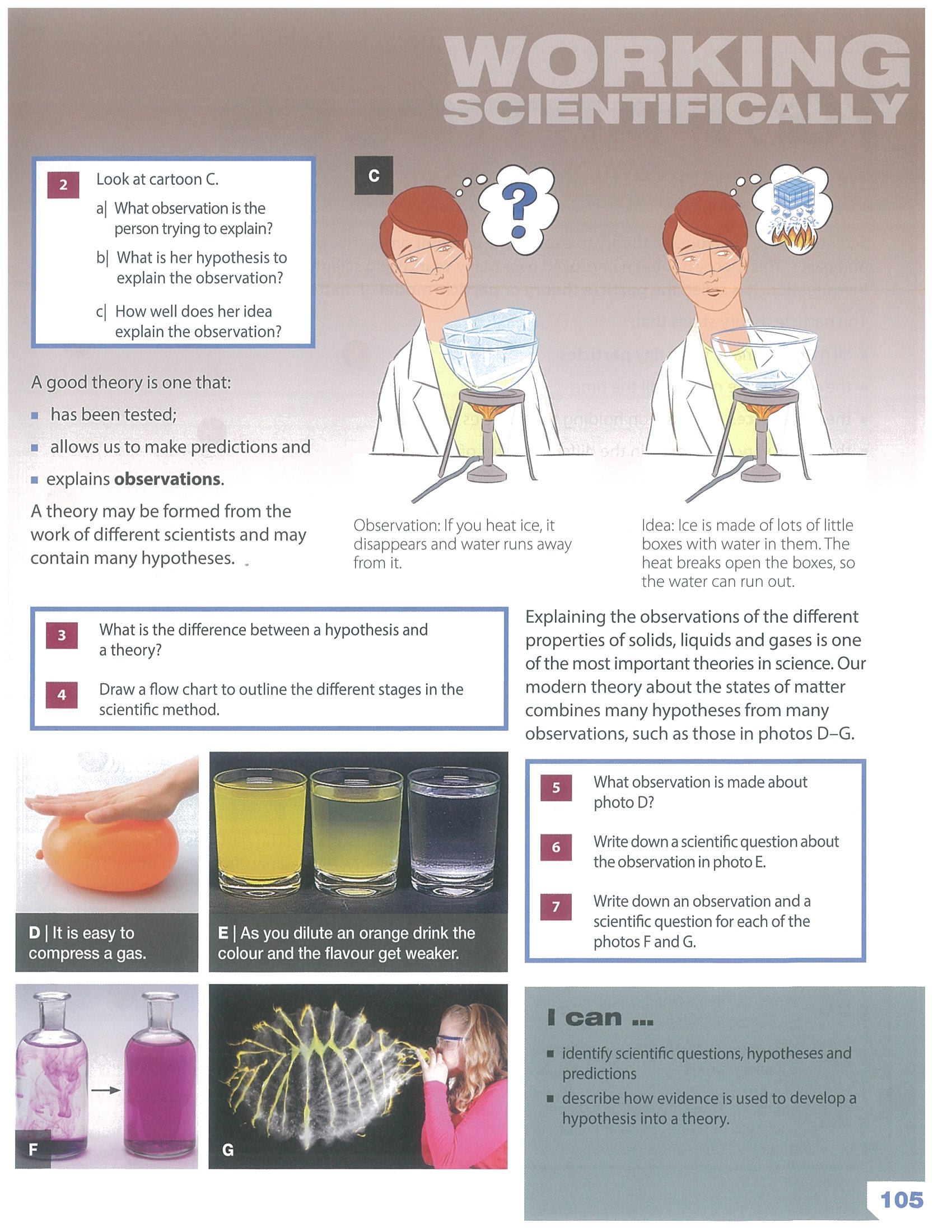
- 能区分 hypothesis 假说、prediction 预测、theory 理论三个概念
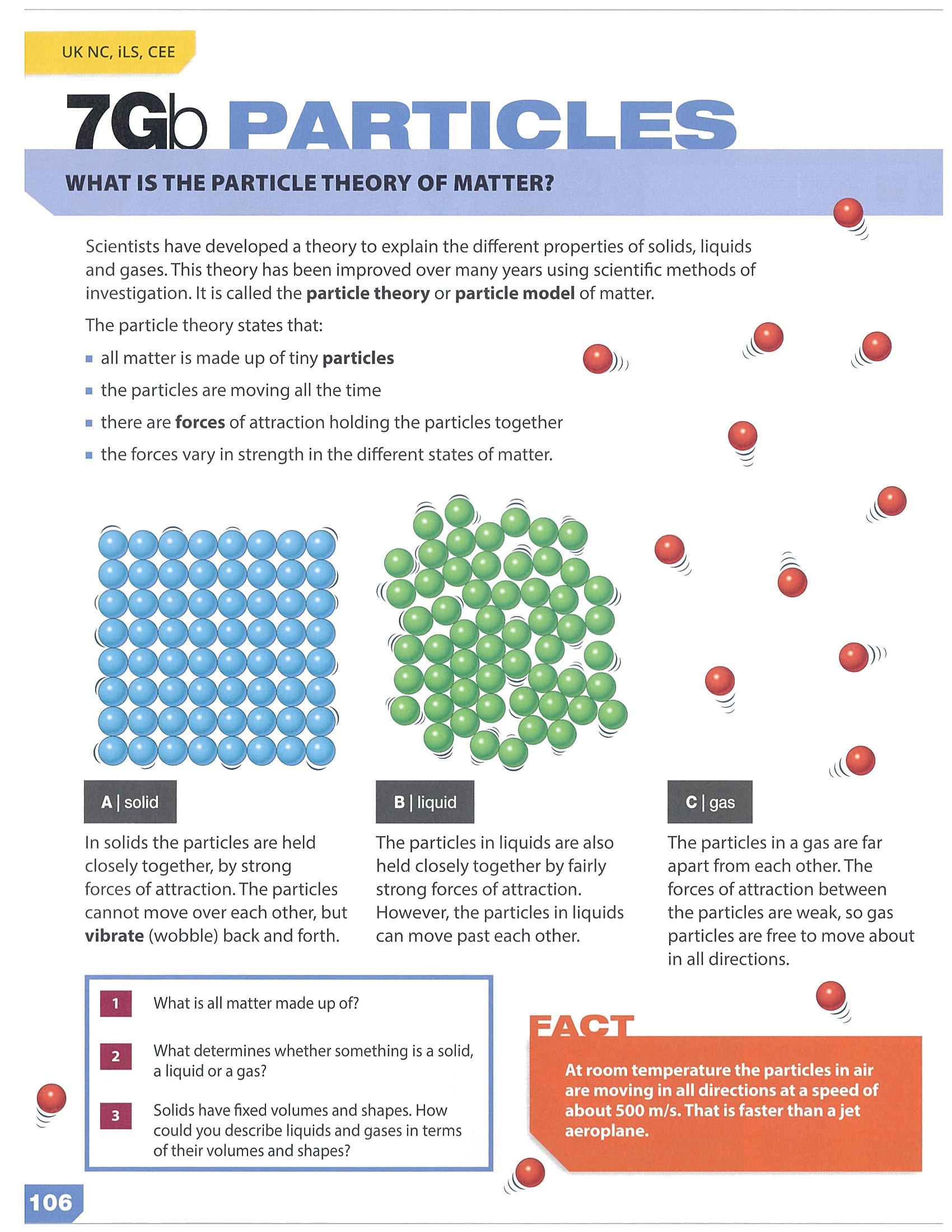
- 能画 + 解释三态的粒子排列(紧密固定 / 紧密但可流动 / 远距自由)
- 能解释 Brownian motion 布朗运动如何为粒子模型提供证据
- 能用粒子模型解释 diffusion 扩散(高浓度→低浓度)
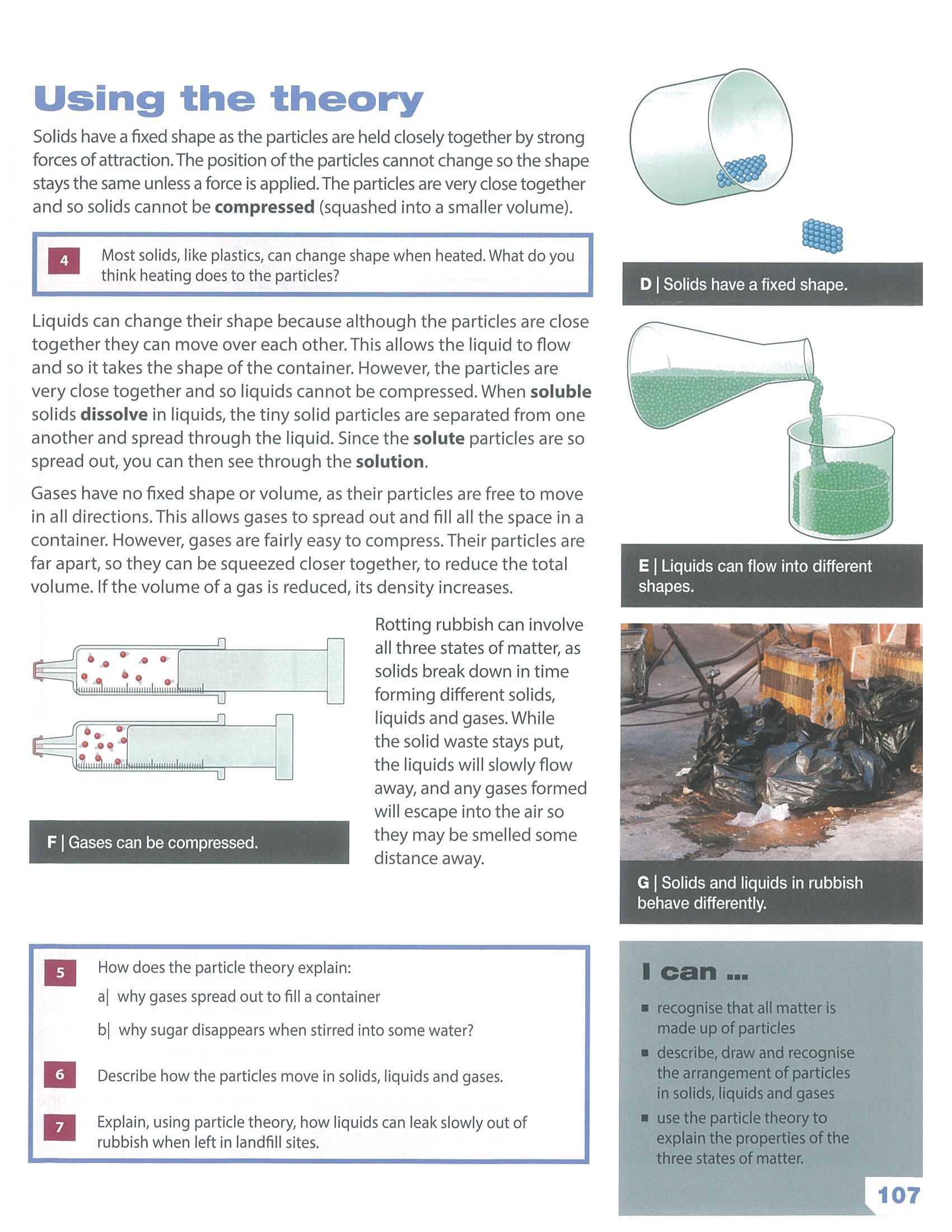
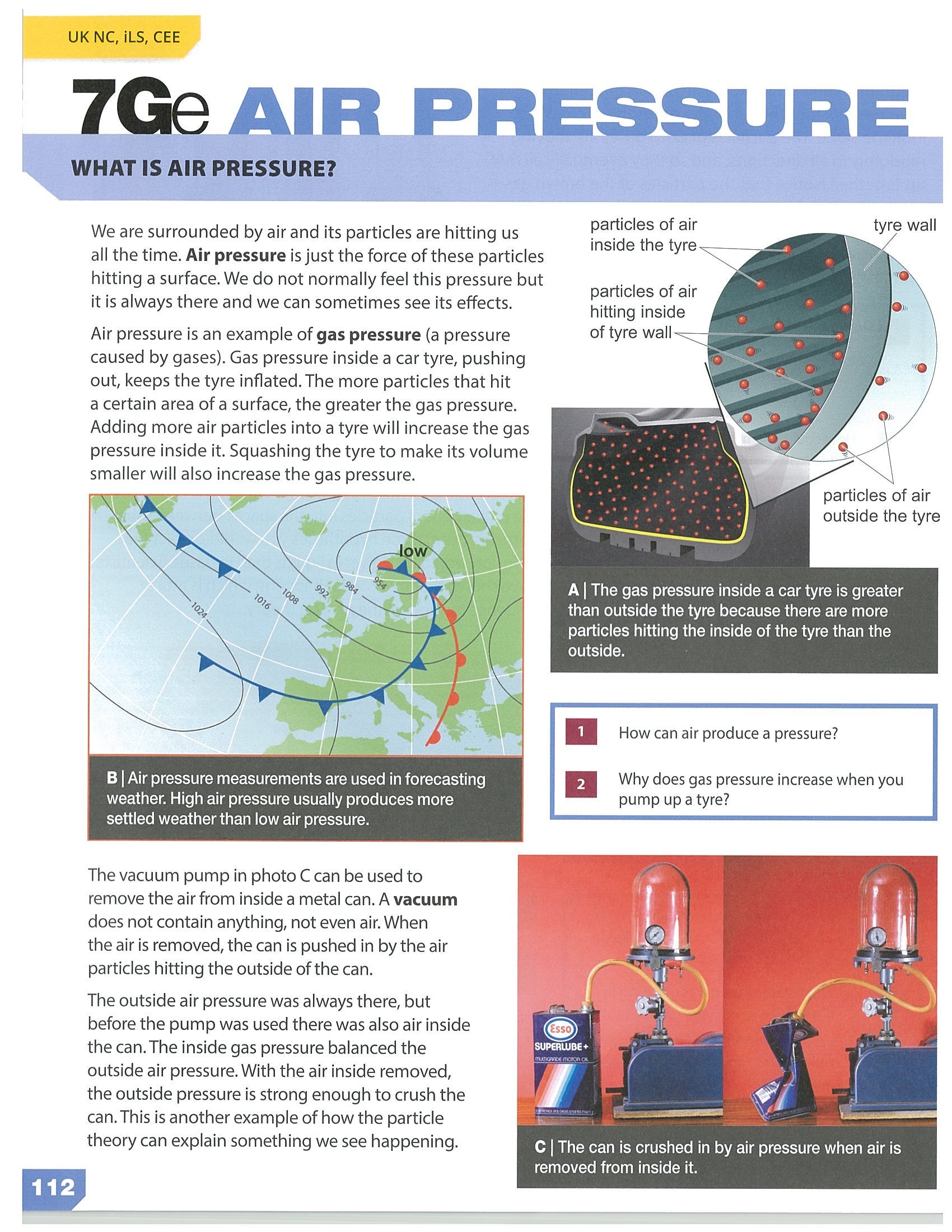
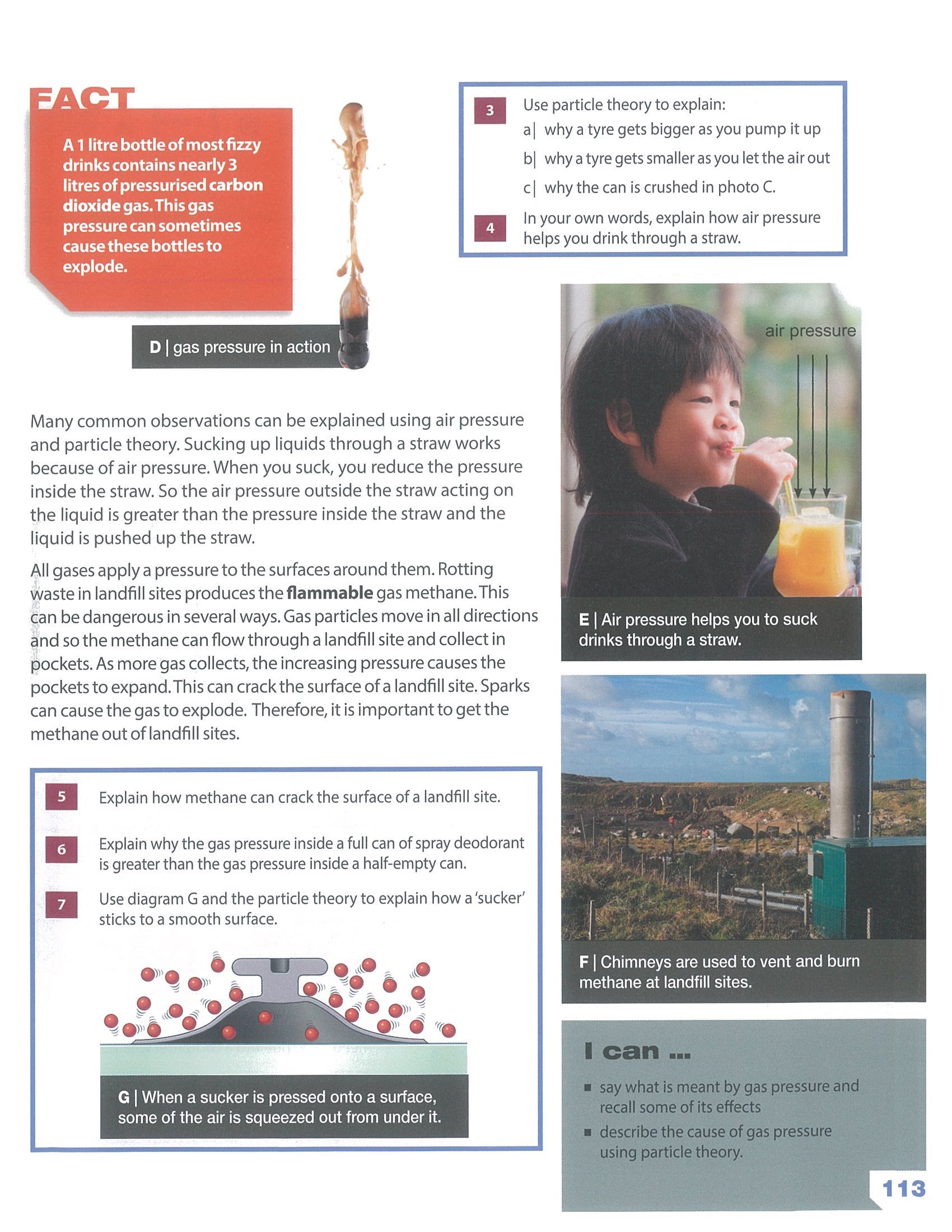
- 能用粒子模型解释 气压(gas pressure)和吸管/压罐头现象
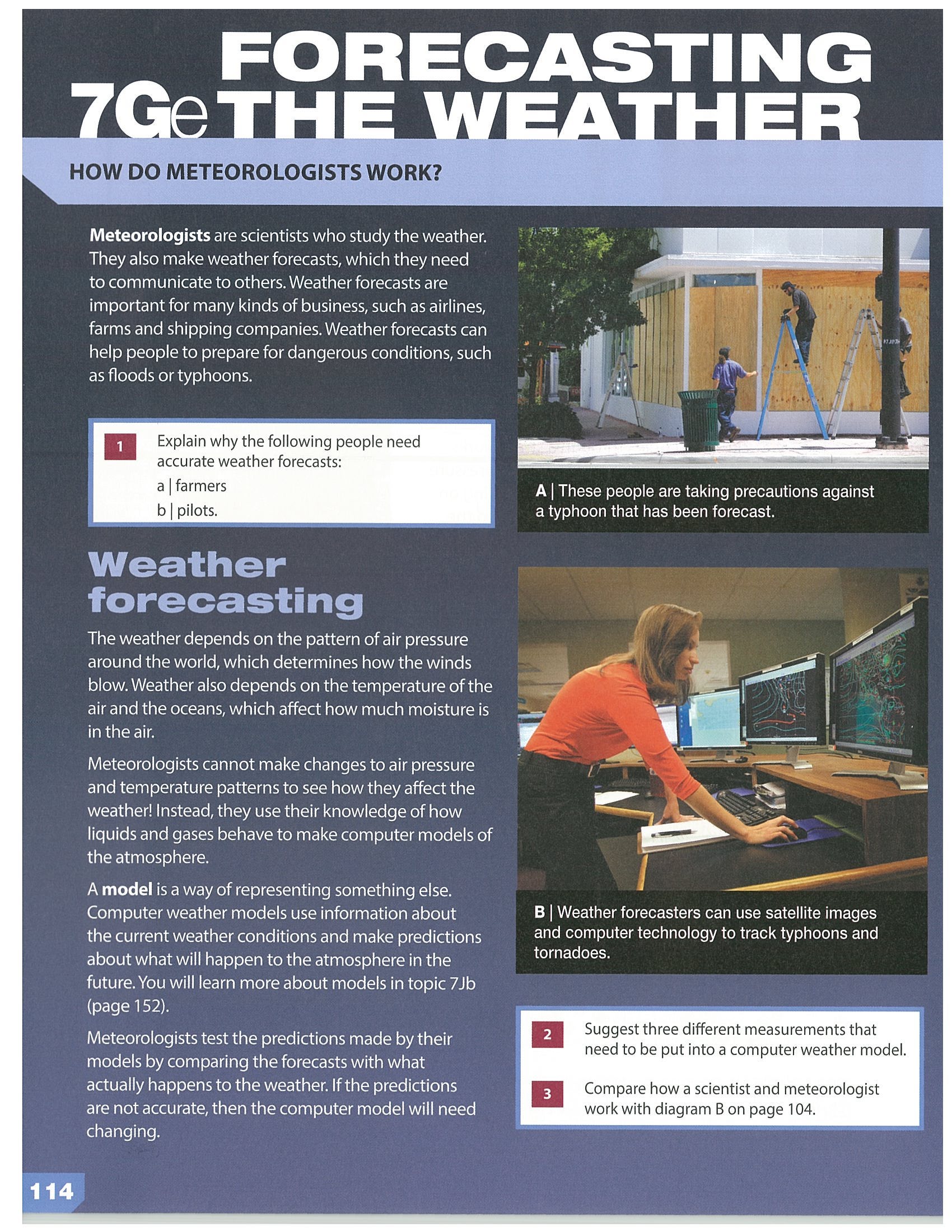
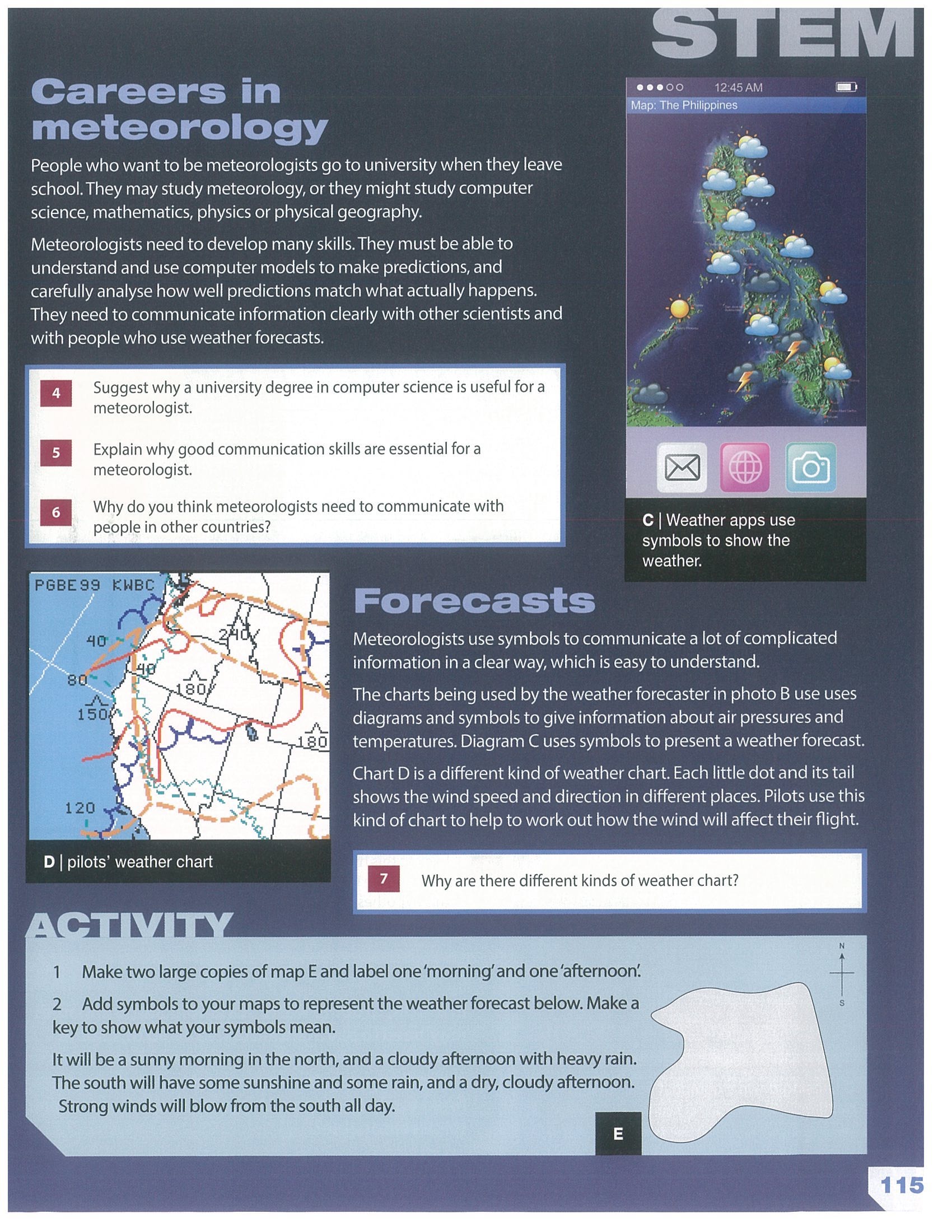
- 能说出气象学家用什么数据/工具做天气预报
🛣️ 推荐学习路径
- 通读教材 16 页(不查词,速读 30 分钟)
- 跟读本视图:左边看教材图,右边看笔记(约 2.5 小时)
- 做 Workbook 7G 全部题目(约 1.5 小时)
- 专项训练:拼写卡 + 三态粒子图标注 + 答题规范(30 分钟)
- 挑战分级练习 L1→L2→L3(约 1 小时)
- 查漏错题本 + 自检清单(考前 30 分钟)
⚠️ 老师常考
- 必考 三态属性对比表(形状 / 体积 / 流动性 / 可压缩性)
- 必考 三态粒子图(描述 + 画出排列)
- 必考 用粒子模型解释扩散(diffusion)
- 必考 用粒子模型解释气压(压扁罐头实验)
- 高频 密度计算 ρ = m / V + 单位换算
- 高频 区分 hypothesis 假说 vs theory 理论
- 高频 Brownian motion 的解释(空气粒子撞击)
- 高频 吸管 / 罐头实验 / 轮胎气压的粒子解释
- 拓展 STEM:气象学家 + 天气符号阅读
🧭 前置回顾(来自 7B / 7E / 7F)
- scientific method 科学方法(7B)—— 7Gb 假说与预测建立在此基础上
- solute / solvent / solution(7E)—— 7Gd 扩散用同样的"溶解"框架
- evaporation 蒸发 / condensation 凝结(7E)—— 7Gc/7Gd 解释液体粒子能离开液面
- concentration 浓度(7E/7F)—— 7Gd 扩散方向:高浓度 → 低浓度
- conservation of mass 质量守恒(7E)—— 状态变化不改变质量
📖 教材跟读 · 左图右注
📄 教材 p.101–103
📝 学习内容
核心理解:三态属性 + 密度公式
1. 物质的三态 — 必背属性表
| 属性 | 固体 Solid | 液体 Liquid | 气体 Gas |
|---|---|---|---|
| 有固定形状? | ✅ 有 | ❌ 没有(随容器) | ❌ 没有 |
| 有固定体积? | ✅ 有 | ✅ 有 | ❌ 没有(填满容器) |
| 能流动? | ❌ 不能 | ✅ 能 | ✅ 能(向各方向) |
| 能被压缩? | ❌ 不能 | ❌ 几乎不能 | ✅ 容易 |
2. 三个关键直觉
- 固体形状体积都固定 → 因为粒子紧密排列、不能移动(只能原地振动)
- 液体体积固定但形状变 → 粒子紧密但能滑过彼此,所以流动、取容器形状
- 气体形状体积都变 → 粒子距离远 + 自由乱动,所以能压缩、填满任意容器
📌 这里只先记结果——粒子层面的解释在 7Gb 详细讲。
3. Volume 体积
物体占据的空间——单位立方厘米 cm³(小物体)/ 立方米 m³(大物体)。
📐 长方体体积:V = 长 × 宽 × 高。例:10 × 5 × 4 cm 木块 → V = 200 cm³。
4. Density 密度 — 必考公式
密度 ρ = 质量 m ÷ 体积 V
单位:g/cm³ 或 kg/m³
含义:1 cm³ 物质有多少 g。
| 物质 | 密度 g/cm³ |
|---|---|
| 空气(气体) | ≈ 0.0012 |
| 水 water | 1.0 |
| 铝 Aluminium | 2.7 |
| 铁 Iron | 7.9 |
| 铅 Lead | 11.3 |
| 金 Gold | 19.3 |
📌 规律:气体 < 液体 < 固体。气体能被压缩 → 密度可变;液体和固体几乎不变。
5. 密度计算 — 三向公式
- 已知 m + V,求 ρ:ρ = m / V
- 已知 ρ + V,求 m:m = ρ × V
- 已知 ρ + m,求 V:V = m / ρ
例:5 cm³ 的铁,m = 7.9 × 5 = 39.5 g。
为什么气体的密度可以改变,液体固体几乎不变?
💡 气体粒子之间距离很远 → 可以被挤近 → 同质量占体积变小 → 密度变大。液体固体粒子已经紧紧挨在一起,没空间再压缩,所以密度基本不变。
6. 不易归类的边界情况
- 沙子 sand:是固体——但小颗粒能像液体一样流动(沙漏)
- 海绵 sponge:是固体——但里面有空气孔,压它压出去的是空气
- 牙膏 toothpaste:介于固体/液体之间(黏液体)
判断时综合 4 个属性看,不要只看一个。
7. 处理废物的状态视角(背景)
- 固体废物:堆在填埋场不会跑——好处理
- 液体废物:会流动、晃荡、溢出——必须用管道或密封容器
- 气体废物:向四面八方扩散,进入大气——最难处理
⚠️ 高频题:给一个物体描述("能流动、形状变、体积不变")让你判断状态 → 液体。或给质量+体积让你算密度。
✅ 学完小检查(3 题)
1. 我能在 4 个属性(形状/体积/流动/压缩)上对比三态
2. 我能用 ρ = m / V 做正反三向计算
3. 我能解释为什么气体密度可变而液体固体几乎不变
💡 句子级中英对照。
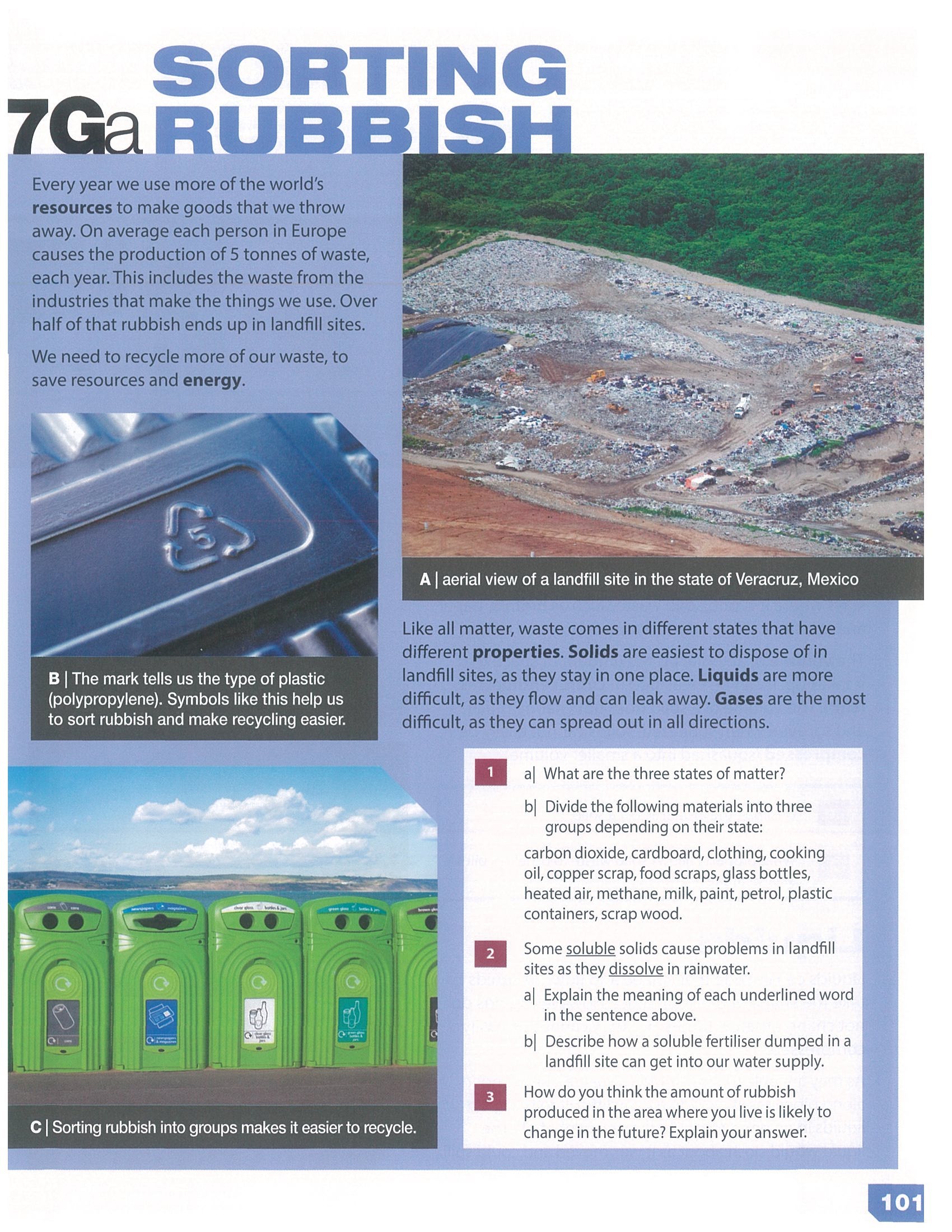
📄 教材 p.101 · 7Ga Rubbish
Every year we use more of the world's resources to make goods that we throw away.
每一年,我们都会使用更多地球资源来制造商品,而这些商品后来又会被我们扔掉。
On average each person in Europe causes the production of 5 tonnes of waste each year.
在欧洲,平均每个人每年会造成 5 吨废物的产生。
This includes the waste from the industries that make the things we use.
这也包括制造我们所用物品的工业所产生的废物。
Over half of that rubbish ends up in landfill sites.
这些垃圾中有一半以上最终会进入垃圾填埋场。
We need to recycle more of our waste, to save resources and energy.
我们需要回收更多废物,以节约资源和能源。
Aerial view of a landfill site in the state of Veracruz, Mexico.
墨西哥韦拉克鲁斯州一处垃圾填埋场的航拍图。
Like all matter, waste comes in different states that have different properties.
像所有物质一样,废物也有不同的状态,而不同状态有不同的性质。
Solids are easiest to dispose of in landfill sites, as they stay in one place.
固体最容易在垃圾填埋场中处理,因为它们会留在原处。
Liquids are more difficult, as they flow and can leak away.
液体更难处理,因为它们会流动,也可能渗漏出去。
Gases are the most difficult, as they can spread out in all directions.
气体最难处理,因为它们会向各个方向扩散。
The mark tells us the type of plastic, polypropylene.
这个标记告诉我们这种塑料的类型是聚丙烯。
Symbols like this help us to sort rubbish and make recycling easier.
像这样的符号可以帮助我们分类垃圾,让回收更容易。
What are the three states of matter?
物质的三种状态是什么?
Divide the following materials into three groups depending on their state: carbon dioxide, cardboard, clothing, cooking oil, copper scrap, food scraps, glass bottles, heated air, methane, milk, paint, petrol, plastic containers, scrap wood.
根据状态,把下面这些材料分成三组:二氧化碳、纸板、衣物、食用油、废铜、食物残渣、玻璃瓶、热空气、甲烷、牛奶、油漆、汽油、塑料容器、废木料。
Some soluble solids cause problems in landfill sites as they dissolve in rainwater.
有些可溶性固体会在垃圾填埋场造成问题,因为它们会溶解在雨水中。
Explain the meaning of each underlined word in the sentence above.
解释上面句子中每个画线词的意思。
Describe how a soluble fertiliser dumped in a landfill site can get into our water supply.
描述被倒入垃圾填埋场的可溶性肥料如何进入我们的供水系统。
How do you think the amount of rubbish produced in the area where you live is likely to change in the future?
你认为你所居住地区产生的垃圾量将来可能会怎样变化?
Explain your answer.
解释你的答案。
Sorting rubbish into groups makes it easier to recycle.
把垃圾分类会让回收更容易。
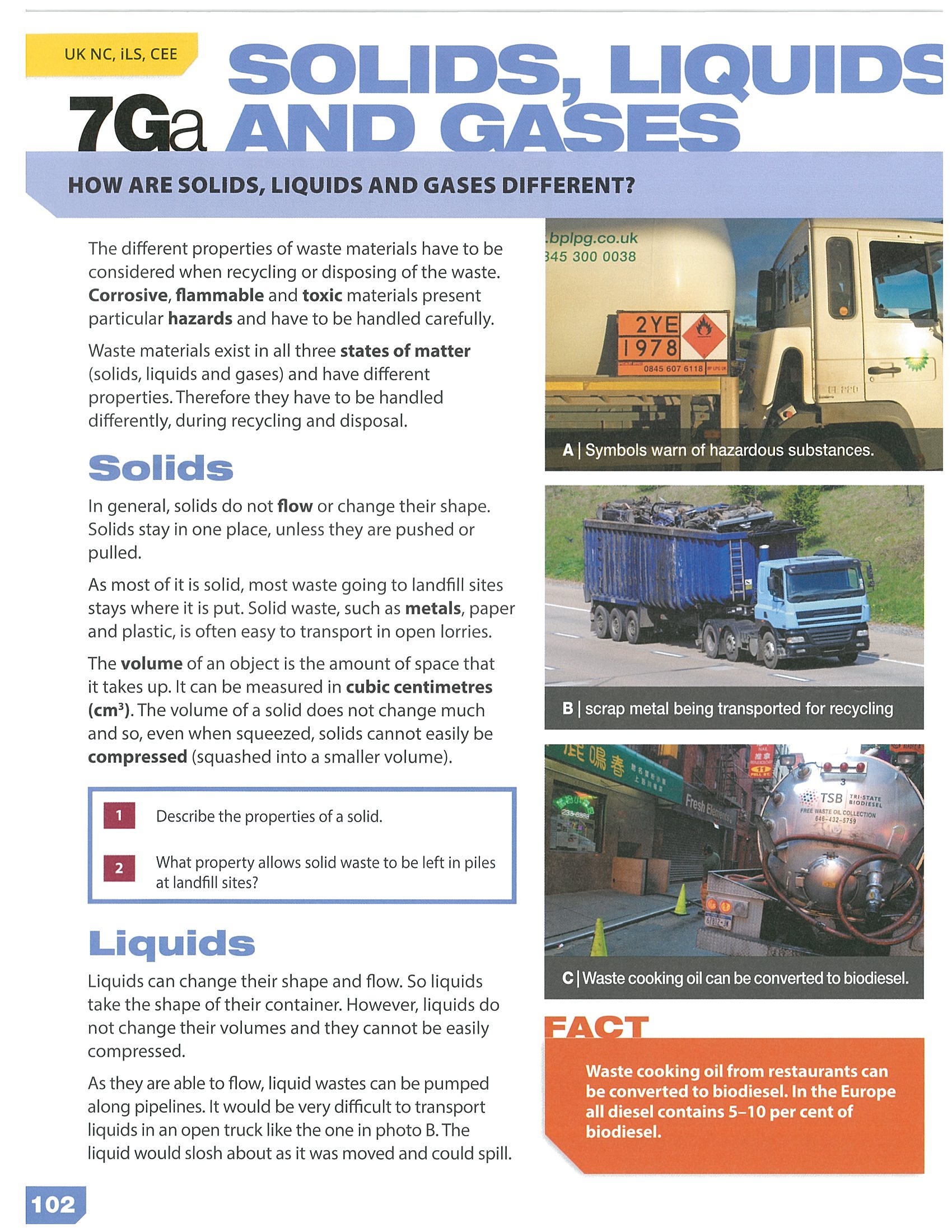
📄 教材 p.102 · 7Ga Solids, Liquids and Gases
The different properties of waste materials have to be considered when recycling or disposing of the waste.
在回收或处理废物时,必须考虑废物材料的不同性质。
Corrosive, flammable and toxic materials present particular hazards and have to be handled carefully.
腐蚀性、易燃性和有毒材料会带来特殊危险,必须小心处理。
Waste materials exist in all three states of matter, solids, liquids and gases, and have different properties.
废物材料可以以物质的三种状态存在,也就是固体、液体和气体,并且具有不同性质。
Therefore they have to be handled differently during recycling and disposal.
因此,在回收和处理时,它们必须用不同方式来处理。
Symbols warn of hazardous substances.
符号会警告人们这里有危险物质。
Solids
固体
In general, solids do not flow or change their shape.
一般来说,固体不会流动,也不会改变形状。
Solids stay in one place, unless they are pushed or pulled.
固体会停留在原处,除非它们被推或被拉。
As most of it is solid, most waste going to landfill sites stays where it is put.
由于大多数垃圾是固体,进入垃圾填埋场的大多数废物会留在放置的位置。
Solid waste, such as metals, paper and plastic, is often easy to transport in open lorries.
固体废物,例如金属、纸和塑料,通常容易用敞篷卡车运输。
The volume of an object is the amount of space that it takes up.
一个物体的体积是它所占据的空间大小。
It can be measured in cubic centimetres (cm3).
体积可以用立方厘米(cm3)来测量。
The volume of a solid does not change much and so, even when squeezed, solids cannot easily be compressed.
固体的体积变化不大,所以即使受到挤压,固体也不容易被压缩。
Compressed means squashed into a smaller volume.
compressed 的意思是被压成更小的体积。
Scrap metal being transported for recycling.
废金属正在被运输去回收。
Describe the properties of a solid.
描述固体的性质。
What property allows solid waste to be left in piles at landfill sites?
固体废物的哪一种性质使它可以在垃圾填埋场堆成一堆?
Liquids
液体
Liquids can change their shape and flow.
液体可以改变形状,也可以流动。
So liquids take the shape of their container.
因此,液体会呈现容器的形状。
However, liquids do not change their volumes and they cannot be easily compressed.
不过,液体不会改变体积,也不容易被压缩。
As they are able to flow, liquid wastes can be pumped along pipelines.
由于液体能够流动,液体废物可以沿着管道被泵送。
It would be very difficult to transport liquids in an open truck like the one in photo B.
要用照片 B 中那样的敞篷卡车运输液体会非常困难。
The liquid would slosh about as it was moved and could spill.
液体在运输时会来回晃动,而且可能洒出来。
Waste cooking oil can be converted to biodiesel.
废弃食用油可以被转化为生物柴油。
FACT
FACT 框
Waste cooking oil from restaurants can be converted to biodiesel.
餐馆产生的废弃食用油可以被转化为生物柴油。
In Europe all diesel contains 5-10 per cent of biodiesel.
在欧洲,所有柴油都含有 5% 到 10% 的生物柴油。
📄 教材 p.103 · Gases and Density
Gases
气体
Gases can change their shape and their volume.
气体可以改变形状,也可以改变体积。
They can spread out in all directions and they can also be easily compressed into a smaller volume.
它们可以向各个方向扩散,也很容易被压缩成更小的体积。
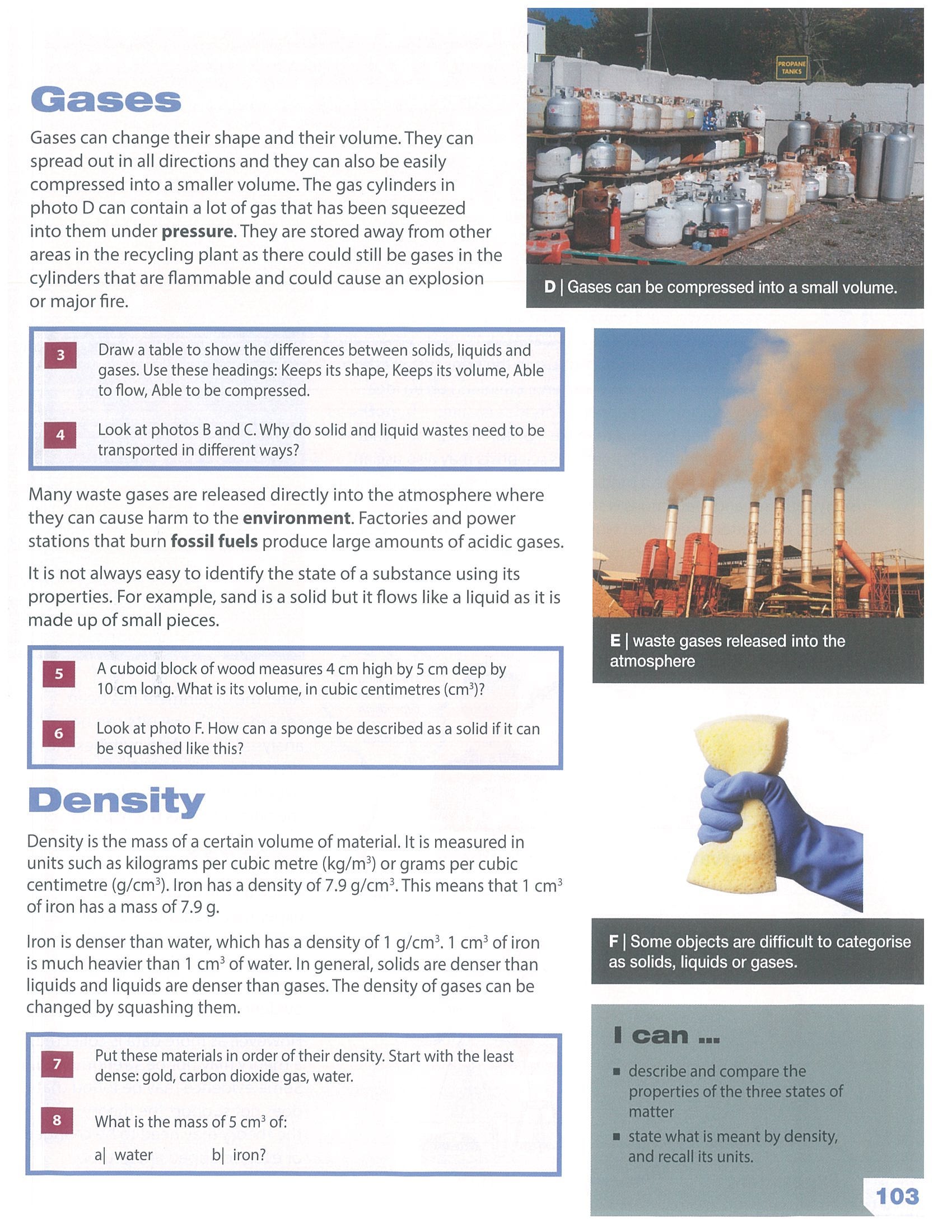
The gas cylinders in photo D can contain a lot of gas that has been squeezed into them under pressure.
照片 D 中的气瓶可以装入大量在压力下被压进去的气体。
They are stored away from other areas in the recycling plant as there could still be gases in the cylinders that are flammable and could cause an explosion or major fire.
它们会被存放在回收厂的其他区域之外,因为气瓶里可能仍有易燃气体,可能造成爆炸或大型火灾。
Gases can be compressed into a small volume.
气体可以被压缩到很小的体积中。
Draw a table to show the differences between solids, liquids and gases.
画一个表格来展示固体、液体和气体之间的差异。
Use these headings: Keeps its shape, Keeps its volume, Able to flow, Able to be compressed.
使用这些表头:保持形状、保持体积、能够流动、能够被压缩。
Look at photos B and C.
看照片 B 和照片 C。
Why do solid and liquid wastes need to be transported in different ways?
为什么固体废物和液体废物需要用不同方式运输?
Many waste gases are released directly into the atmosphere where they can cause harm to the environment.
许多废气会被直接释放到大气中,并可能对环境造成危害。
Factories and power stations that burn fossil fuels produce large amounts of acidic gases.
燃烧化石燃料的工厂和发电站会产生大量酸性气体。
It is not always easy to identify the state of a substance using its properties.
只根据性质来判断一种物质的状态,并不总是容易的。
For example, sand is a solid but it flows like a liquid as it is made up of small pieces.
例如,沙子是固体,但它由许多小颗粒组成,所以会像液体一样流动。
Waste gases released into the atmosphere.
废气被释放到大气中。
A cuboid block of wood measures 4 cm high by 5 cm deep by 10 cm long.
一个长方体木块高 4 cm、深 5 cm、长 10 cm。
What is its volume, in cubic centimetres (cm3)?
它的体积是多少立方厘米(cm3)?
Look at photo F.
看照片 F。
How can a sponge be described as a solid if it can be squashed like this?
如果海绵可以像这样被压扁,为什么它仍然可以被描述为固体?
Density
密度
Density is the mass of a certain volume of material.
密度是一定体积材料所具有的质量。
It is measured in units such as kilograms per cubic metre (kg/m3) or grams per cubic centimetre (g/cm3).
密度可以用千克每立方米(kg/m3)或克每立方厘米(g/cm3)等单位来测量。
Iron has a density of 7.9 g/cm3.
铁的密度是 7.9 g/cm3。
This means that 1 cm3 of iron has a mass of 7.9 g.
这意味着 1 cm3 的铁质量为 7.9 g。
Iron is denser than water, which has a density of 1 g/cm3.
铁比水密度更大,而水的密度是 1 g/cm3。
1 cm3 of iron is much heavier than 1 cm3 of water.
1 cm3 的铁比 1 cm3 的水重得多。
In general, solids are denser than liquids and liquids are denser than gases.
一般来说,固体的密度大于液体,液体的密度大于气体。
The density of gases can be changed by squashing them.
气体的密度可以通过压缩来改变。
Some objects are difficult to categorise as solids, liquids or gases.
有些物体很难被归类为固体、液体或气体。
Put these materials in order of their density.
按照密度大小排列这些材料。
Start with the least dense: gold, carbon dioxide gas, water.
从密度最小的开始:金、二氧化碳气体、水。
What is the mass of 5 cm3 of water?
5 cm3 水的质量是多少?
What is the mass of 5 cm3 of iron?
5 cm3 铁的质量是多少?
I can…
我能……
I can describe and compare the properties of the three states of matter.
我能描述并比较物质三种状态的性质。
I can state what is meant by density, and recall its units.
我能说出密度是什么意思,并记住它的单位。
💡 7Ga 出现的 6 个核心英文术语 · 含音标 / 词性 / 词源 / 教材原句 / 现代延伸 / 易错。
⚛️ 物质与三态
particle
/ˈpɑːtɪkl/
n.
粒子、微粒
词源拉丁 particula = "小颗粒"(part 部分 + -icula 小的)
教材"Everything is made of tiny particles."(万物都由微小的粒子组成)
延伸① dust particle 尘粒 ② particle physics 粒子物理 ③ 物理中的 particle 既可指原子也可指分子
particle ≠ atom:粒子模型里的"particle"是抽象球,可代表原子或分子;不要直接说成 atom。
matter
/ˈmætə(r)/
n.
物质
词源拉丁 materia = "原料、木料"(与 mother 同源,意为"产生万物的母体")
教材"the three states of matter"(物质的三态)
延伸① What's the matter? 怎么了? ② It doesn't matter. 没关系 ③ subject matter 主题
同根material n. 材料 提示科学里 matter 永远指"占空间且有质量的东西"
solid
/ˈsɒlɪd/
n./adj.
固体;坚固的
词源拉丁 solidus = "实心的、整块的"
教材"Solids have a fixed shape and a fixed volume."(固体有固定的形状和体积)
延伸① solid evidence 确凿证据 ② solid gold 纯金 ③ solid line 实线
反义liquid, gas, hollow
liquid
/ˈlɪkwɪd/
n./adj.
液体;液态的
词源拉丁 liquidus = "流动的、清澈的"(liquere 流)
教材"Liquids have a fixed volume but no fixed shape."(液体体积固定但形状不固定)
延伸① liquid soap 液体肥皂 ② liquid assets 流动资产(财经) ③ liquidate v. 清算
gas
/ɡæs/
n.
气体
词源17 世纪比利时化学家 van Helmont 从希腊 chaos(混沌)造的词——粒子像混沌一样四处乱飞
教材"Gases have neither a fixed shape nor a fixed volume."
延伸① natural gas 天然气 ② gasoline / gas 美式"汽油" ③ gas station 加油站
英美差异:英语里 gas = 气体;美语里 gas 常指汽油(gasoline)。科学课文用英式含义。
📏 物理量
density
/ˈdensəti/
n.
密度
词源拉丁 densus = "厚的、密集的" + -ity 名词后缀
教材"Density = mass ÷ volume. Its units are g/cm³ or kg/m³."
延伸① population density 人口密度 ② dense forest 茂密森林 ③ dense fog 浓雾
易错density 与 weight 不同:同体积的铁比木重 → 铁 density 大;但 1 kg 铁 = 1 kg 木(质量相同)。