← Science
🏠 首页·Science·Grade 6

7B Sexual Reproduction in Animals

学习进度
0%

🚪 学习前导 · 先看这里再开始

🎯 学完你能干什么

  1. 能解释科学方法 6 个阶段(observation → data)并应用
  2. 能区分 internal / external fertilisation,并各举一个动物
  3. 能在图上标出男女生殖系统的 6 个主要器官
  4. 能说出精子和卵子的 specialised features
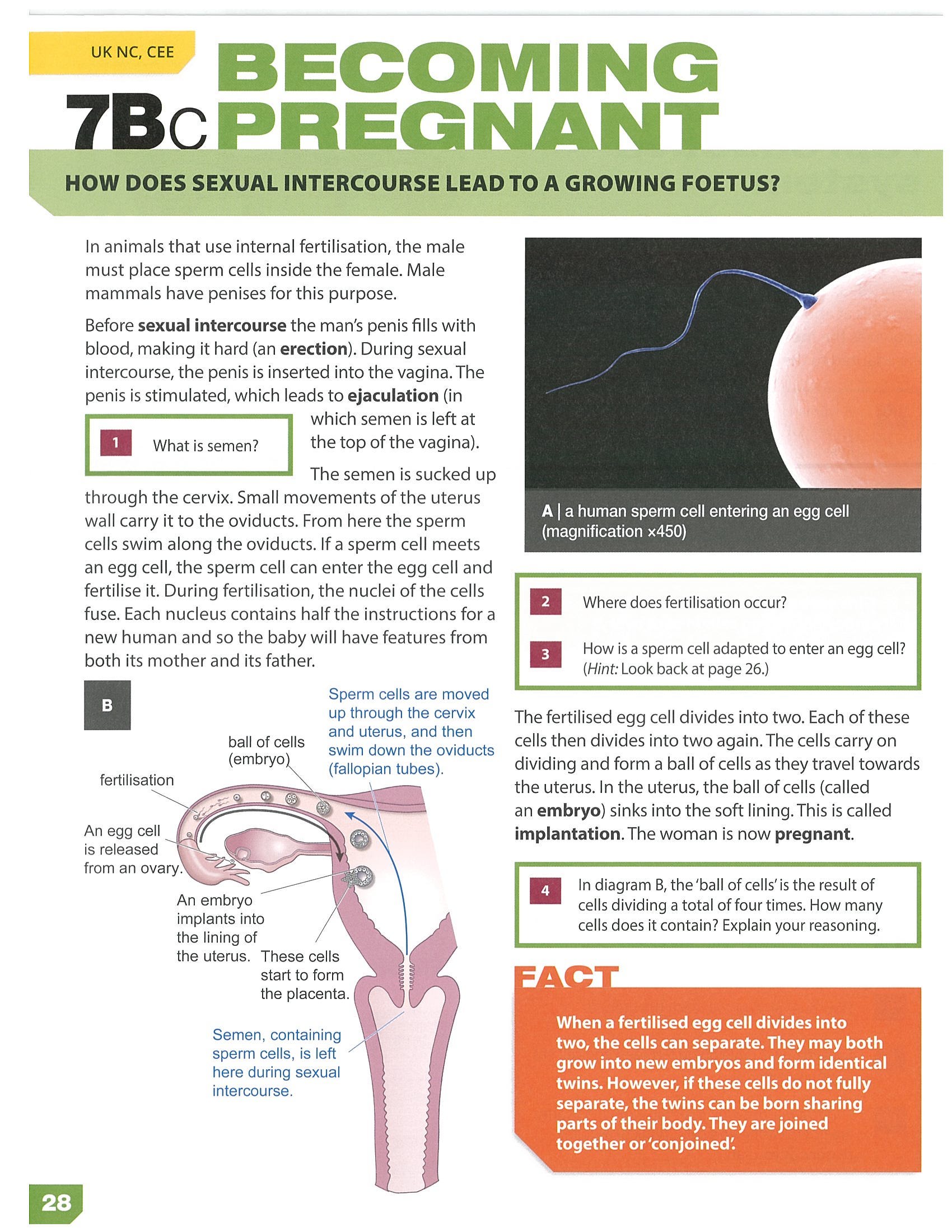
  5. 能解释怀孕过程:受精 → 植入 → 胎盘形成
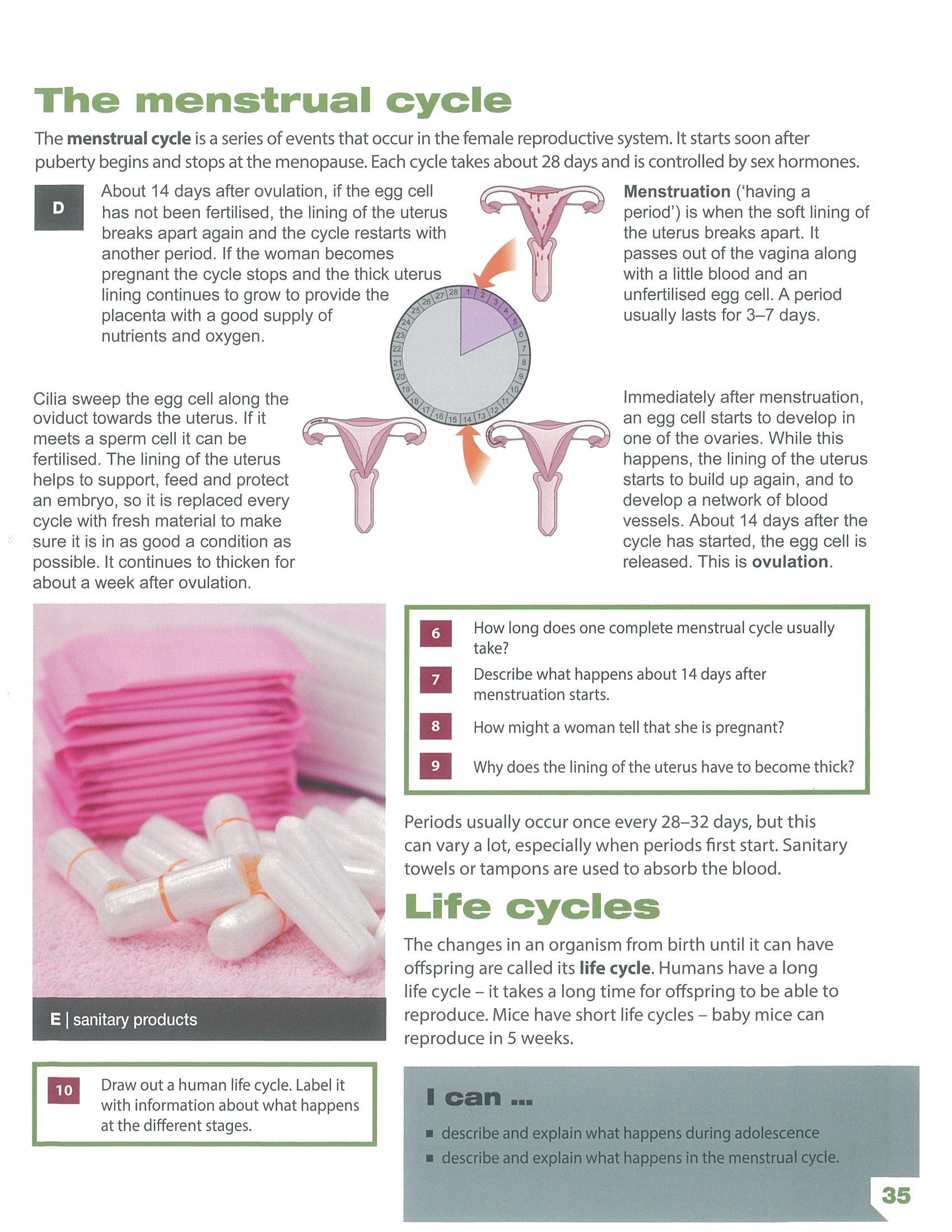
  6. 能画出 28 天月经周期并标出 ovulation 和 menstruation
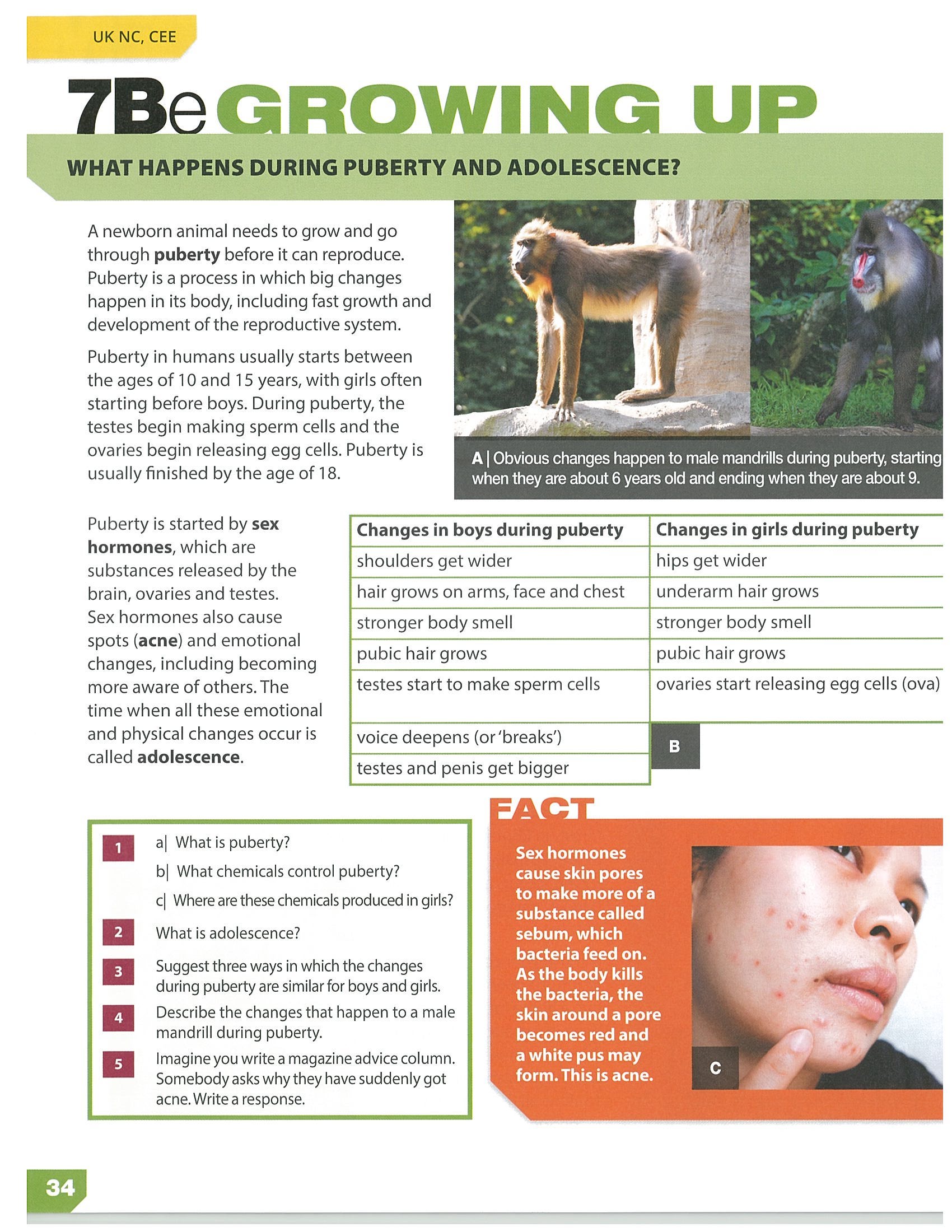
  7. 能描述男女青春期变化和"能繁殖"的标志

🛣️ 推荐学习路径

  1. 通读教材 16 页(不查词,速读 30 分钟)
  2. 跟读本视图:左边看教材图,右边看笔记(约 2.5 小时)
  3. Workbook 7B 全部题目(约 1.5 小时)
  4. 专项训练:拼写卡 + 图标注 + 答题规范(30 分钟)
  5. 挑战分级练习 L1→L2→L3(约 1 小时)
  6. 查漏错题本 + 自检清单(考前 30 分钟)
建议分 5–6 天完成,每天 1 小时(本章术语比 7A 多)

⚠️ 老师常考

  • 必考 科学方法 6 阶段(含 Redi 实验)
  • 必考 男女生殖系统图标注
  • 必考 28 天月经周期图标注
  • 高频 fertilisation 发生在 oviduct(陷阱!)
  • 高频 embryo(8周内)vs foetus(8周后)
  • 高频 placenta / amnion / umbilical cord 功能区分
  • 拓展 STEM:濒危物种保护、人工授精、热成像

🧭 前置回顾(来自 7A)

本章会反复用到 7A 的概念,确认你掌握:
  • cell → tissue → organ → organ system 五层级
  • specialised cell(特化细胞)——精子卵子就是典型
  • cell 结构:cell membrane / nucleus / cytoplasm / mitochondria
  • life processes 中的 reproduction(繁殖)
  • evidence 的科学含义

📖 教材跟读 · 左图右注

📄 教材 p.21–25
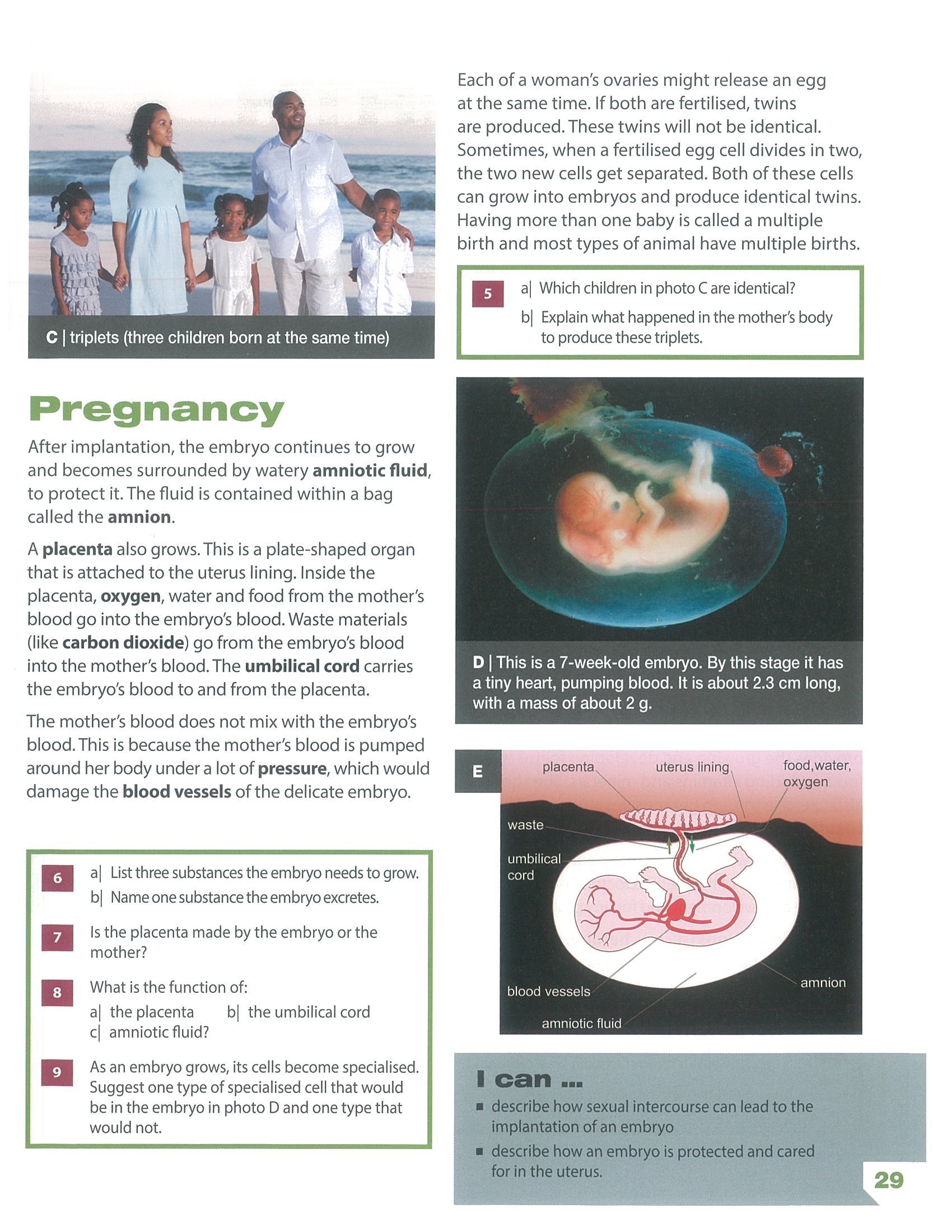
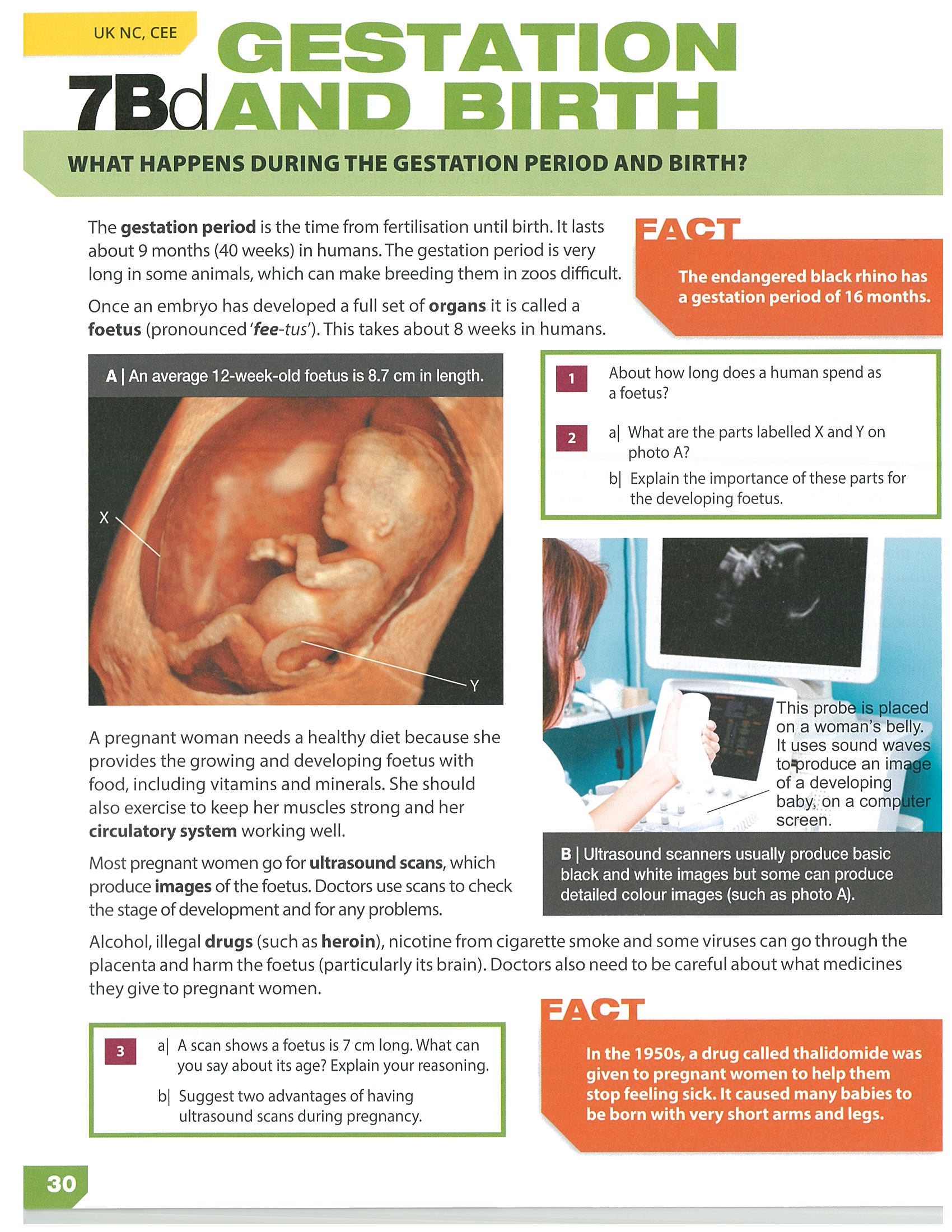
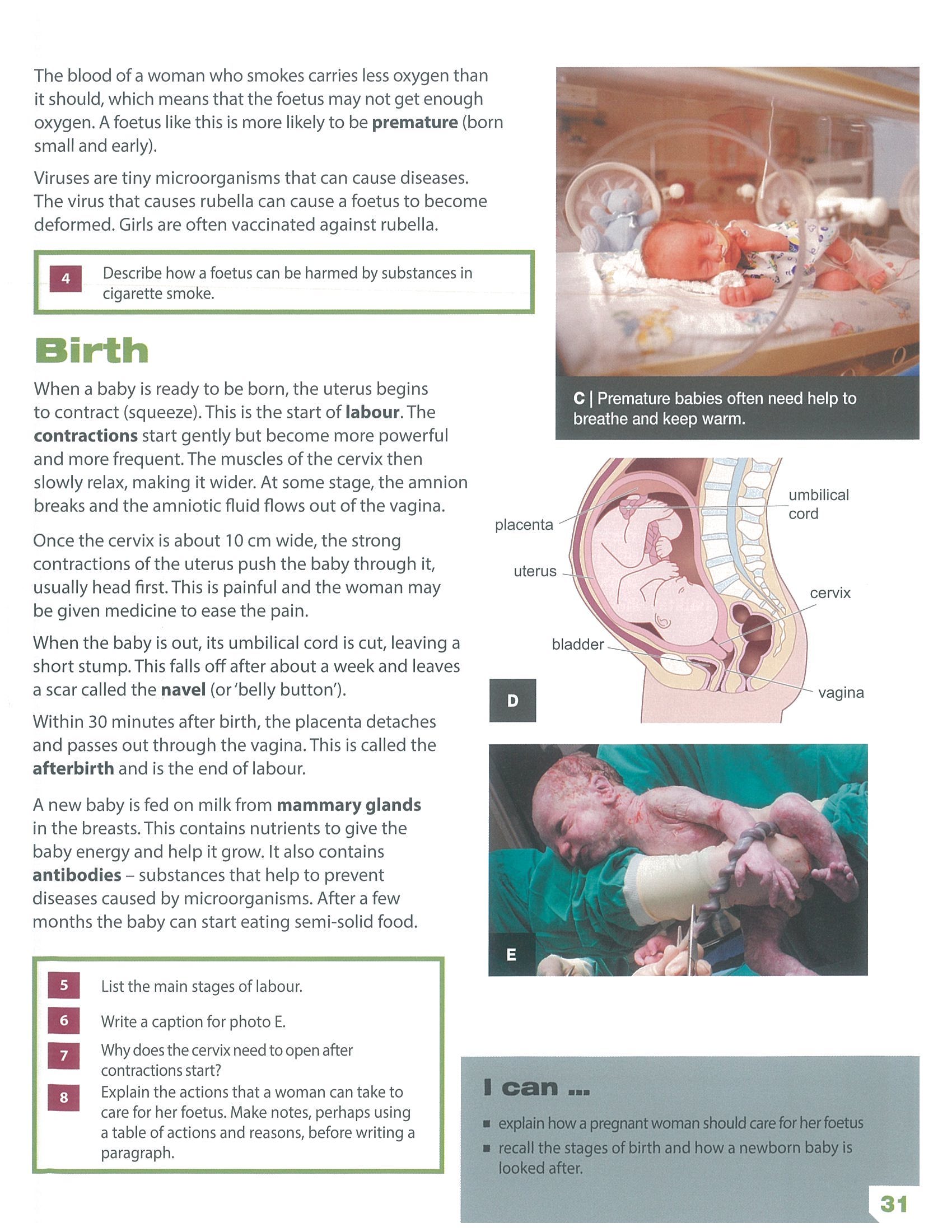
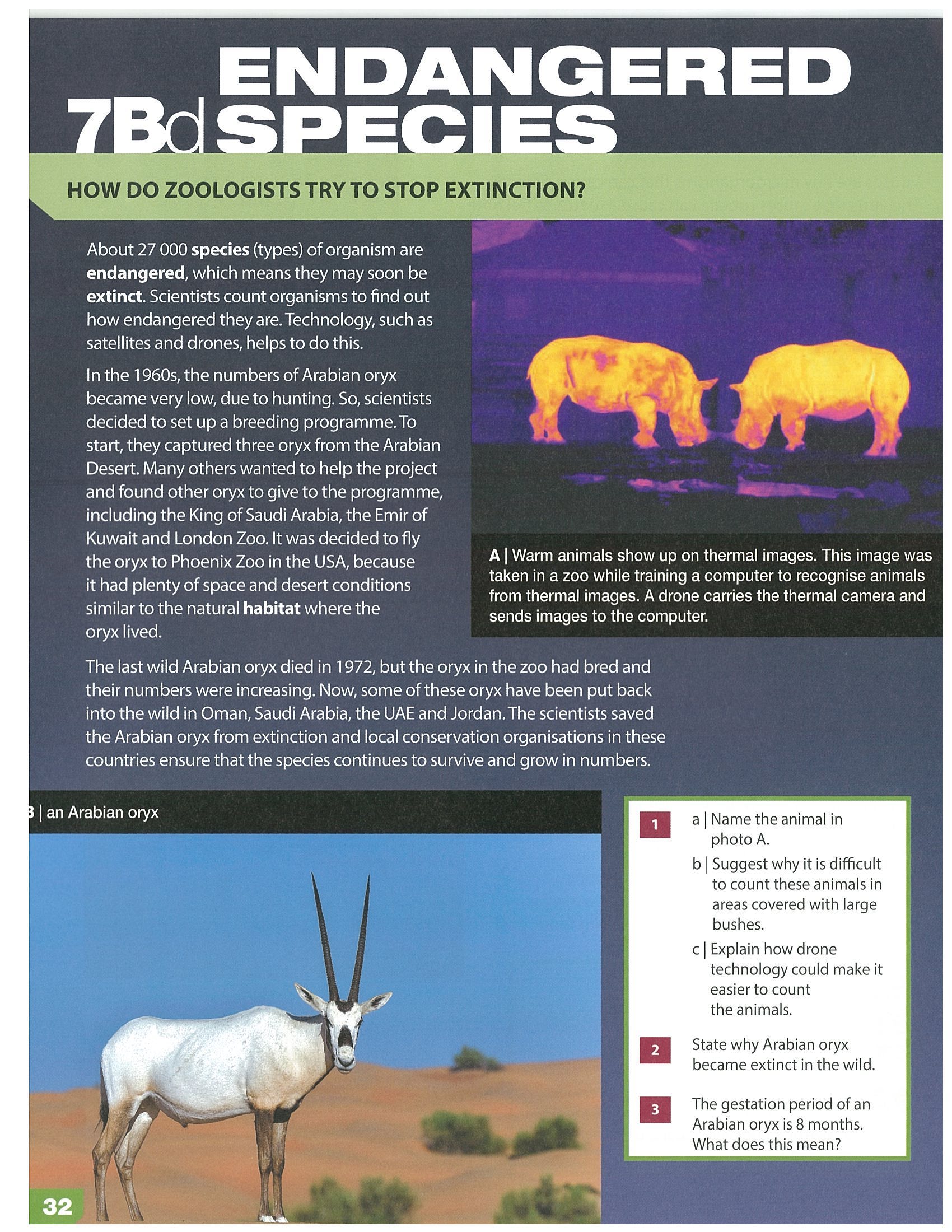
page 21 page 22 page 23 page 24 page 25
📝 学习内容

核心理解:科学方法 + 有性生殖

这一节是 7B 单元的入口,引出两个核心概念:

  1. 怎么科学地思考问题(科学方法 6 阶段)——整本书反复用
  2. 动物怎么繁殖(gamete → fertilisation → zygote)

科学方法 6 阶段(必背)

英文中文含义
observation观察看到的事实,常引出问题
question问题"为什么会这样?"
hypothesis假设一个回答问题的想法
prediction预测"如果假设对,就会……"
experiment实验用来检验预测
data数据实验得到的信息
hypothesis 和 prediction 有什么区别?
💡 hypothesis想法/解释("腐烂的香蕉皮产生苍蝇");prediction根据假设预言会发生什么("如果对,那盖纱布的瓶子里不会出现苍蝇")。prediction 常用 "if...then..." 句式。

Redi 的实验(1668)

17 世纪有人相信"汗+小麦=老鼠"、"腐肉自发产生苍蝇"。Francesco Redi 用控制变量实验反驳:把肉放进瓶子,一部分盖纱布、一部分敞开。结果:只有敞开的瓶子里有蛆,说明苍蝇是从外面飞进来产卵。这是经典的控制变量实验——只改一个条件,其它都相同。

有性生殖关键术语

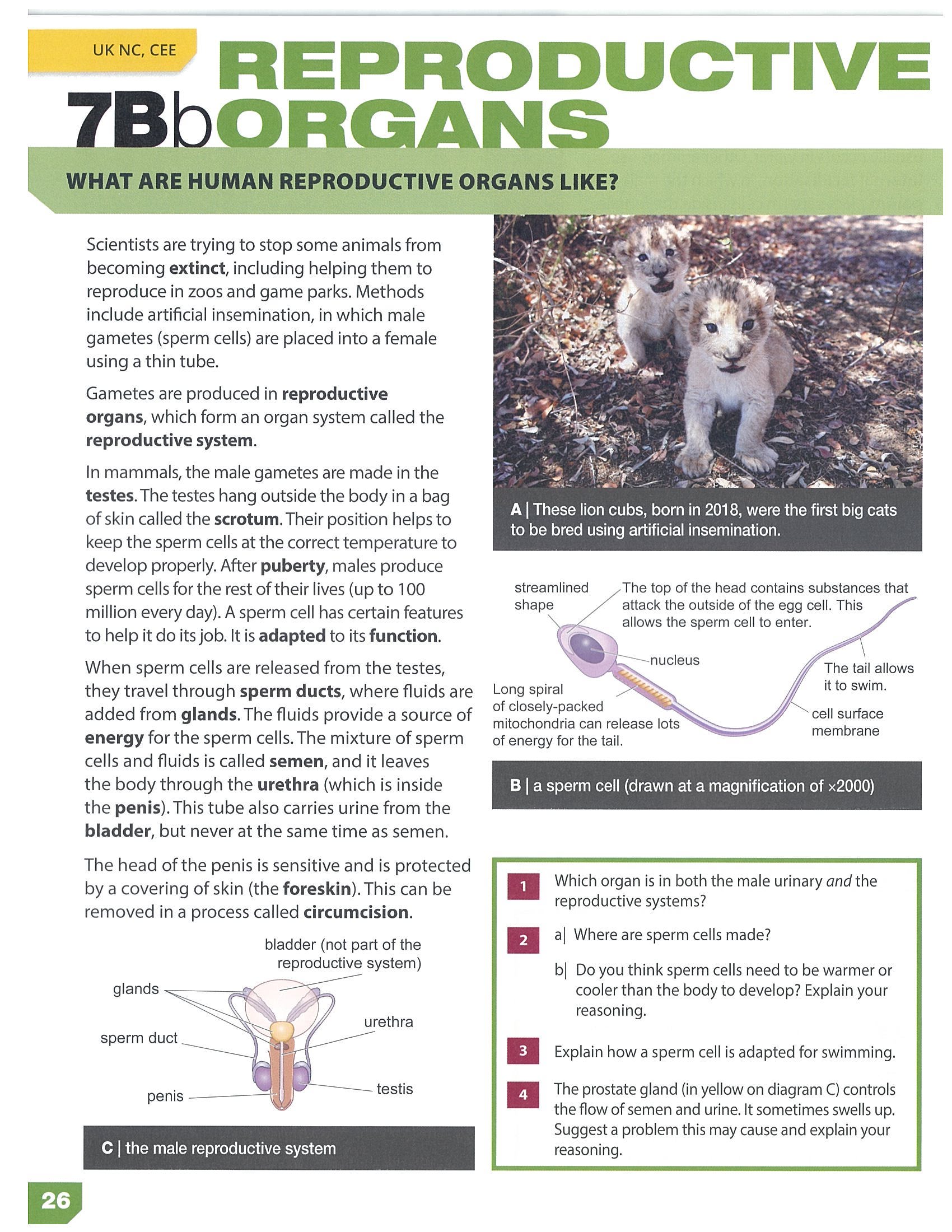
  • gamete 配子 = 特化的性细胞
  • sperm cell 精子(雄性 gamete)
  • egg cell / ovum / ova 卵子(雌性 gamete,单数 ovum 复数 ova)
  • fertilisation 受精 = 精子和卵子的细胞核 fuse 融合
  • zygote 受精卵 = 融合后的细胞

外受精 vs 内受精

外受精 external内受精 internal
地点母体外(水里)母体内
例子大部分鱼类鸟类、哺乳动物
卵的数量很多(很多会被吃 / 冲走)(保护好)
父母照顾多(哺乳、护蛋)
Mouthbrooder fish(嘴含鱼)把受精卵含在嘴里。你预期它产的卵比同体型其他鱼多还是少
💡 。因为含嘴里 = 保护好 = 存活率高 = 不需要靠数量取胜。这是典型的"功能反推数量"题。
⚠️ 常见错误:fertilisation ≠ 精子进入卵子。重点是两个细胞核 fuse 融合,不只是接触。

✅ 学完小检查(3 题)

1. 我能默写科学方法 6 个阶段及含义
2. 我能区分 hypothesis / prediction / data
3. 我能解释 internal vs external fertilisation 的区别和卵数量差异的原因

💡 句子级中英对照。建议先关掉翻译尝试读英文,卡住再切回来。

📄 教材 p.21 · 7Ba Escaped Zoo Animals

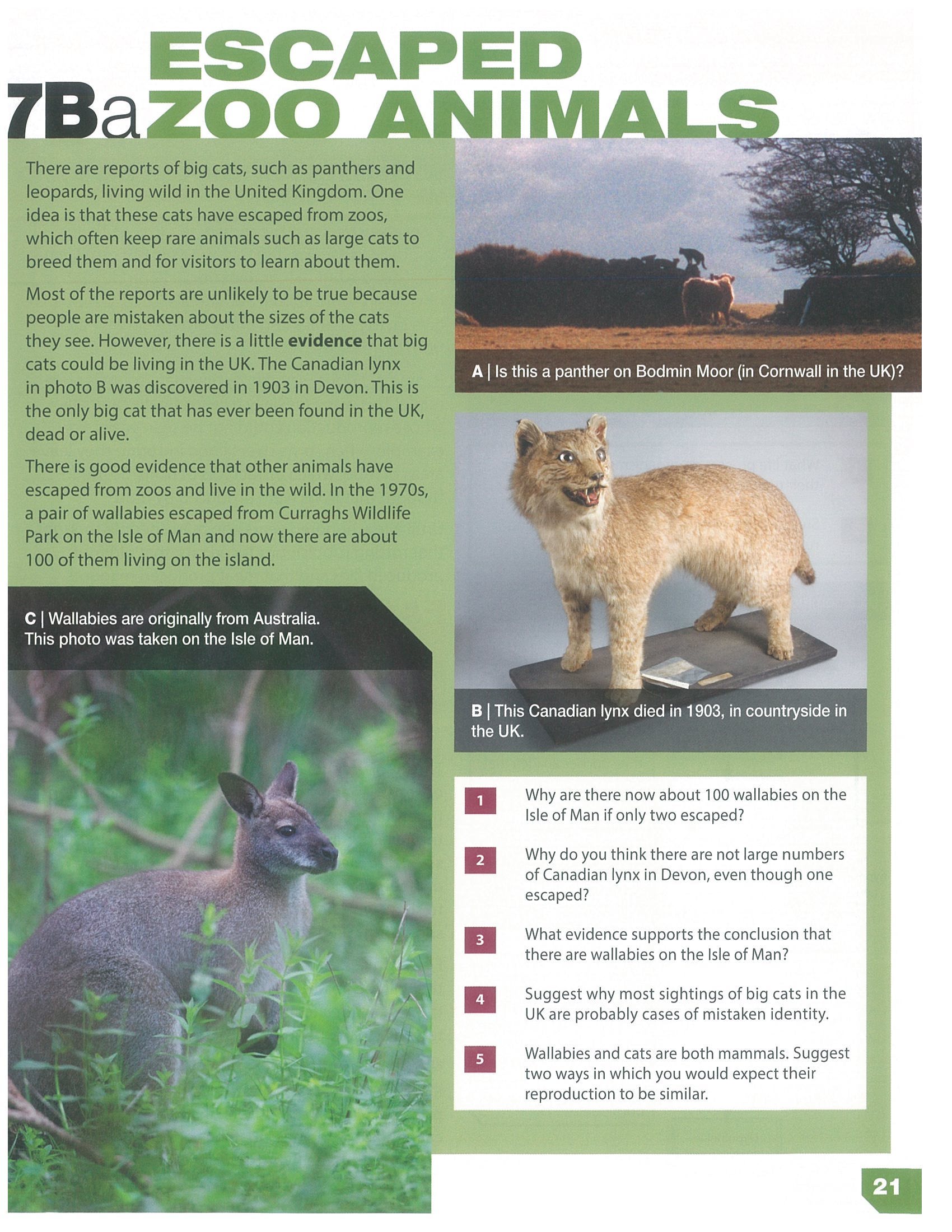
There are reports of big cats, such as panthers and leopards, living wild in the United Kingdom.
有报道说英国野外有大型猫科动物(如黑豹美洲豹)出没。
One idea is that these cats have escaped from zoos, which often keep rare animals such as large cats to breed them and for visitors to learn about them.
一种说法是这些猫科是从动物园逃出来的——动物园常饲养稀有动物(比如大型猫科),既为了繁殖,也供游客了解。
Most of the reports are unlikely to be true because people are mistaken about the sizes of the cats they see.
大多数报道可能不是真的——人们经常把看到的猫体型搞错。
However, there is a little evidence that big cats could be living in the UK.
不过,确实有一点点证据(evidence)表明大型猫科可能在英国生存。
The Canadian lynx in photo B was discovered in 1903 in Devon. This is the only big cat that has ever been found in the UK, dead or alive.
图 B 里的加拿大猞猁 1903 年在 Devon 被发现——这是英国唯一被确认(无论活的还是死的)的大型猫科。
There is good evidence that other animals have escaped from zoos and live in the wild. In the 1970s, a pair of wallabies escaped from Curraghs Wildlife Park on the Isle of Man and now there are about 100 of them living on the island.
不过有充分证据显示其他动物确实从动物园逃出来、在野外生存。1970 年代,一对小袋鼠从马恩岛 Curraghs 野生动物园逃出,现在岛上大约有 100 只
A | Is this a panther on Bodmin Moor (in Cornwall in the UK)?
图 A | 这是英国 Cornwall 郡 Bodmin Moor 上的一只黑豹吗?
B | This Canadian lynx died in 1903, in countryside in the UK.
图 B | 这只加拿大猞猁 1903 年死于英国乡间。
C | Wallabies are originally from Australia. This photo was taken on the Isle of Man.
图 C | 小袋鼠原产于澳大利亚。这张照片摄于马恩岛。
Q1 Why are there now about 100 wallabies on the Isle of Man if only two escaped?
第 1 题 当初只逃出 2 只小袋鼠,为什么现在马恩岛上有约 100 只?(答:它们繁殖(reproduce)了——岛上条件适合,没有天敌)
Q2 Why do you think there are not large numbers of Canadian lynx in Devon, even though one escaped?
第 2 题 既然有一只加拿大猞猁跑了出去,为什么 Devon 没有大群猞猁?(答:要繁殖必须有雌雄两只同种动物相遇,只跑一只无法繁殖)
Q3 What evidence supports the conclusion that there are wallabies on the Isle of Man?
第 3 题 哪些证据支持"马恩岛上有小袋鼠"这一结论?(答:照片、目击报告、岛上发现的脚印 / 粪便等)
Q4 Suggest why most sightings of big cats in the UK are probably cases of mistaken identity.
第 4 题 推测:为什么英国大多数大型猫科目击事件可能是看错?(答:远处的家猫 / 狗 / 黑色野生动物在阴暗里看起来很大)
Q5 Wallabies and cats are both mammals. Suggest two ways in which you would expect their reproduction to be similar.
第 5 题 小袋鼠和猫都是哺乳动物。推测它们的繁殖在哪两方面相似。(答:都用内受精;后代在母体内发育;都用乳汁喂养幼崽)

📄 教材 p.22 · 7Ba The Scientific Method (WS)

WHAT IS THE SCIENTIFIC METHOD AND WHY IS IT USEFUL?
什么是科学方法?为什么它有用?
All organisms must reproduce to increase their numbers and make sure that their type of organism does not die out (become extinct).
所有生物都必须繁殖(reproduce)来增加数量,确保自己这种生物不会消亡(灭绝 extinct)。
Reproduction is obvious in some animals. Mammals (such as humans) give birth to babies and many other animals hatch from large eggs.
有些动物的繁殖很明显。哺乳动物(如人)生小宝宝,其他许多动物从大蛋里孵出。
People did not always know how new animals were made!
古人并不总是知道新动物是怎么来的!
For example, when some rivers flood in spring they leave areas of mud, which attract lots of frogs. So, people thought that frogs were produced by mud.
比如有些河春天泛滥后会留下泥地,吸引很多青蛙。所以古人以为青蛙是泥巴生出来的。
Until a few hundred years ago many people thought that rotting rubbish produced rats, that old fruit produced flies and that meat produced maggots.
直到几百年前,很多人还以为:腐烂的垃圾产生老鼠、坏水果产生苍蝇、肉产生蛆。
FACT
FACT 框
People in the 17th-century believed this was a recipe for mice: Place some sweaty underwear in a jar with some wheat. Wait 21 days. The sweat will turn the wheat into mice.
17 世纪有人相信这样能"造出"老鼠:把出过汗的内衣放进装麦子的罐子里,等 21 天,汗水会让麦子变成老鼠。(当然是错的!)
These sorts of ideas were not scientific. People observed maggots in old meat and so they thought that the meat produced maggots, but they did not test this idea.
这些想法不科学。人们看到旧肉里有蛆,就以为肉产生蛆——但他们没有检验这个想法。
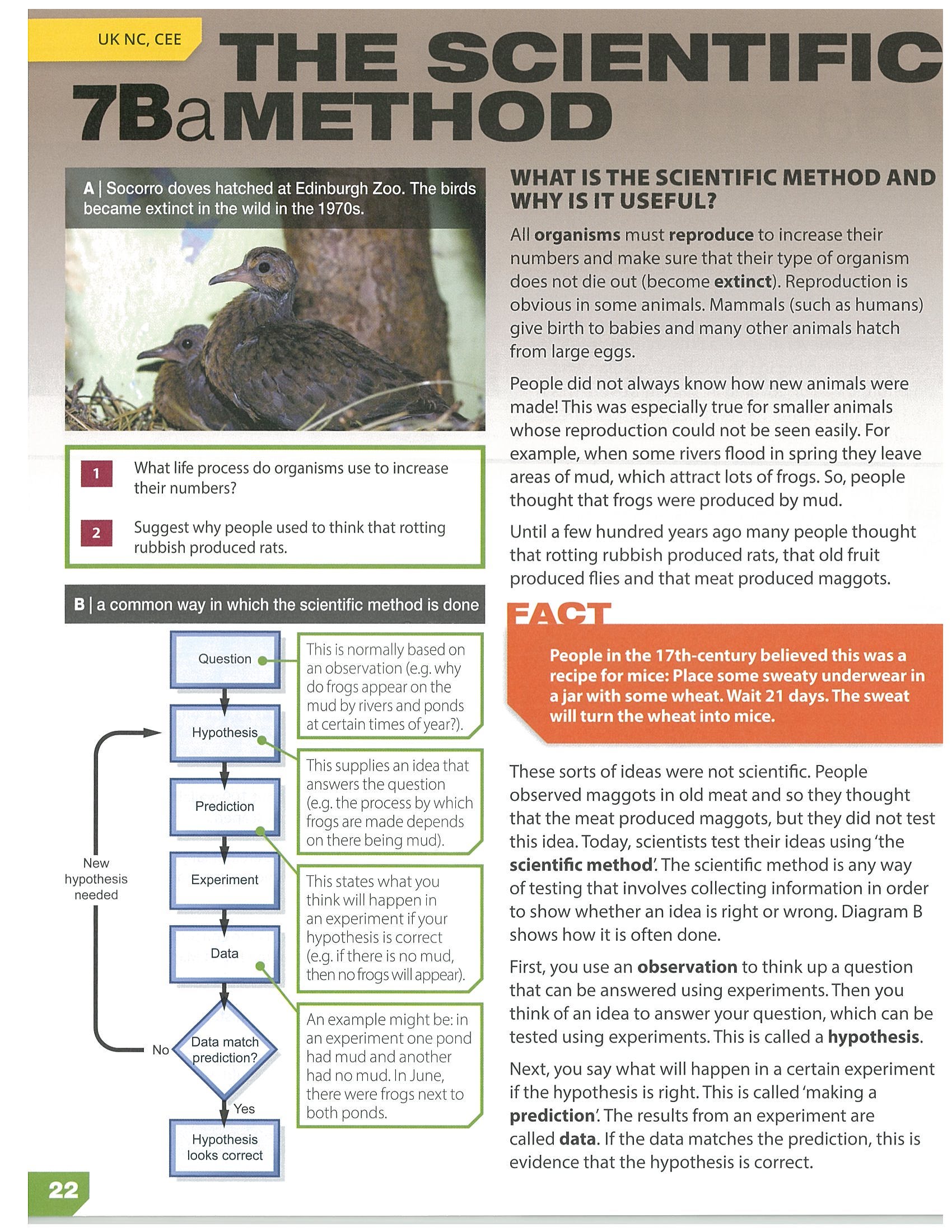
Today, scientists test their ideas using 'the scientific method'. The scientific method is any way of testing that involves collecting information in order to show whether an idea is right or wrong.
今天科学家用"科学方法(scientific method)"检验想法——任何通过收集信息来判断某个想法对错的方法。
B | the scientific method flow chart
图 B | 科学方法流程(流程图)
First, you use an observation to think up a question that can be answered using experiments. (E.g. why do frogs appear on the mud by rivers and ponds at certain times of year?)
第一步:根据观察(observation)提出一个能用实验回答的问题(question)。(比如:为什么青蛙在一年中某些季节会出现在河塘旁的泥地上?)
Then you think of an idea to answer your question, which can be tested using experiments. This is called a hypothesis.
然后想一个能用实验检验的、回答这个问题的想法——叫假设(hypothesis)。(例如:青蛙的产生依赖于有没有泥地)
Next, you say what will happen in a certain experiment if your hypothesis is correct. This is called making a prediction.
接下来:如果假设对,某个实验里会发生什么——这叫做预测(prediction)。(例如:如果没有泥地,就没有青蛙出现)
The results from an experiment are called data. If the data matches the prediction, this is evidence that the hypothesis is correct.
实验(experiment)得到的结果叫数据(data)。如果数据符合预测,就是支持假设的证据。
An example might be: in an experiment one pond had mud and another had no mud. In June, there were frogs next to both ponds. → Data does NOT match prediction → New hypothesis needed.
举例:实验里一个池塘有泥、一个没泥。六月时两个池塘旁都有青蛙——数据符合预测——需要新的假设。
Q1 What life process do organisms use to increase their numbers?
第 1 题 生物用什么生命过程增加数量?(答:reproduction 繁殖
Q2 Suggest why people used to think that rotting rubbish produced rats.
第 2 题 推测:为什么古人曾以为腐烂垃圾产生老鼠?(答:看到老鼠常出现在垃圾堆里,没做实验就直接相信)

📄 教材 p.23 · 7Ba Banana Experiment + Redi (WS)

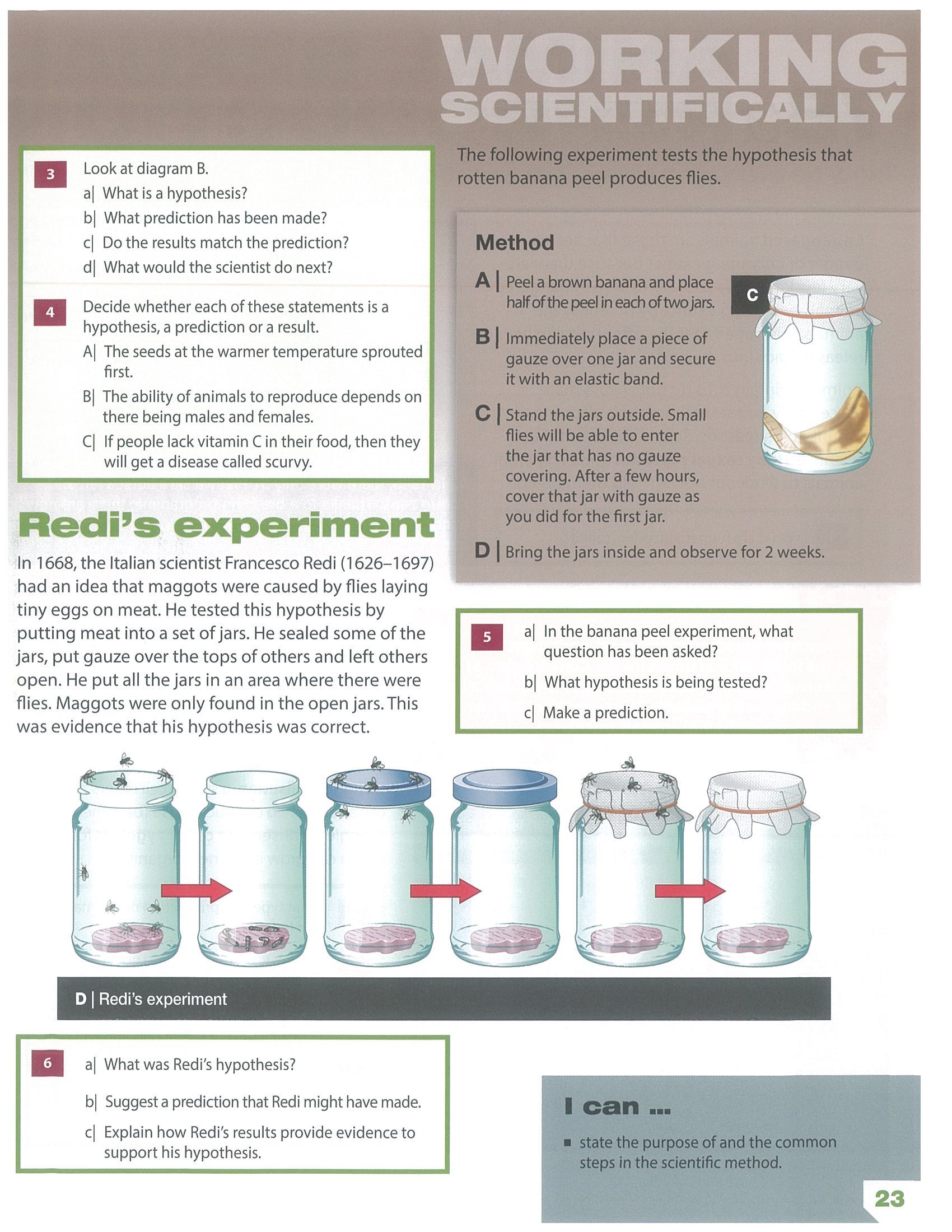
Working Scientifically — Banana peel experiment
科学方法实验 — 香蕉皮实验
The following experiment tests the hypothesis that rotten banana peel produces flies.
下面这个实验检验一个假设:腐烂的香蕉皮能产生苍蝇。
A | Peel a brown banana and place half of the peel in each of two jars.
A | 剥一根熟透的香蕉,把香蕉皮分成两半,各放进两个玻璃罐。
B | Immediately place a piece of gauze over one jar and secure it with an elastic band.
B | 马上用纱布盖住其中一个罐,并用橡皮筋固定。
C | Stand the jars outside. Small flies will be able to enter the jar that has no gauze covering. After a few hours, cover that jar with gauze as you did for the first jar.
C | 把两个罐放到户外。小苍蝇能飞进没盖纱布的那个罐。几小时后,给它也盖上纱布(和第一个一样)。
D | Bring the jars inside and observe for 2 weeks.
D | 把两个罐拿回室内,观察 2 周。
Redi's experiment
雷迪的实验
In 1668, the Italian scientist Francesco Redi (1626–1697) had an idea that maggots were caused by flies laying tiny eggs on meat.
1668 年,意大利科学家 Francesco Redi(弗朗切斯科·雷迪) 想到一个假设:蛆是苍蝇在肉上产的小卵孵化出来的。
He tested this hypothesis by putting meat into a set of jars. He sealed some of the jars, put gauze over the tops of others and left others open.
他把肉放进一组罐子检验这个假设:一些罐子密封、一些盖纱布、剩下的敞开。
He put all the jars in an area where there were flies. Maggots were only found in the open jars. This was evidence that his hypothesis was correct.
他把所有罐子放在有苍蝇的地方。结果只有敞开的罐里出现蛆。这就是支持他假设的证据。
Q3 Look at diagram B. a) What is a hypothesis? b) What prediction has been made? c) Do the results match the prediction? d) What would the scientist do next?
第 3 题 看图 B。a) 假设是什么?(青蛙的产生依赖泥地) b) 预测是什么?(没有泥地就没有青蛙) c) 结果符合预测吗?(不符合:两个池塘旁都有青蛙) d) 科学家下一步做什么?(提出新的假设并再次检验)
Q4 Decide whether each statement is a hypothesis, a prediction or a result: A The seeds at the warmer temperature sprouted first. B The ability of animals to reproduce depends on there being males and females. C If people lack vitamin C in their food, then they will get a disease called scurvy.
第 4 题 判断每句是 hypothesis / prediction / result。A 温度高的种子先发芽(result 结果) B 动物的繁殖能力依赖于有雌雄(hypothesis 假设) C 如果人缺乏维生素 C,会得坏血病(prediction 预测)
Q5 a) In the banana peel experiment, what question has been asked? b) What hypothesis is being tested? c) Make a prediction.
第 5 题 a) 香蕉皮实验问的是什么问题?(腐烂的香蕉皮能产生苍蝇吗?) b) 检验的假设?(香蕉皮能产生苍蝇) c) 做一个预测。(如果假设对,盖纱布的罐里不会有苍蝇)
Q6 a) What was Redi's hypothesis? b) Suggest a prediction that Redi might have made. c) Explain how Redi's results provide evidence to support his hypothesis.
第 6 题 a) Redi 的假设?(蛆是苍蝇在肉上产卵孵化出来的)b) 他可能做的预测?(如果假设对,密封 / 盖纱布的罐子里不会有蛆) c) 解释结果如何支持他的假设。(只有敞开罐里有蛆 → 苍蝇能接触到肉就会有蛆,进不去就没有)
I can…
我能……
state the purpose of and the common steps in the scientific method
说出科学方法的目的和常用步骤

📄 教材 p.24 · 7Ba Animal Sexual Reproduction

HOW DO DIFFERENT ANIMALS REPRODUCE SEXUALLY?
不同动物如何进行有性生殖?
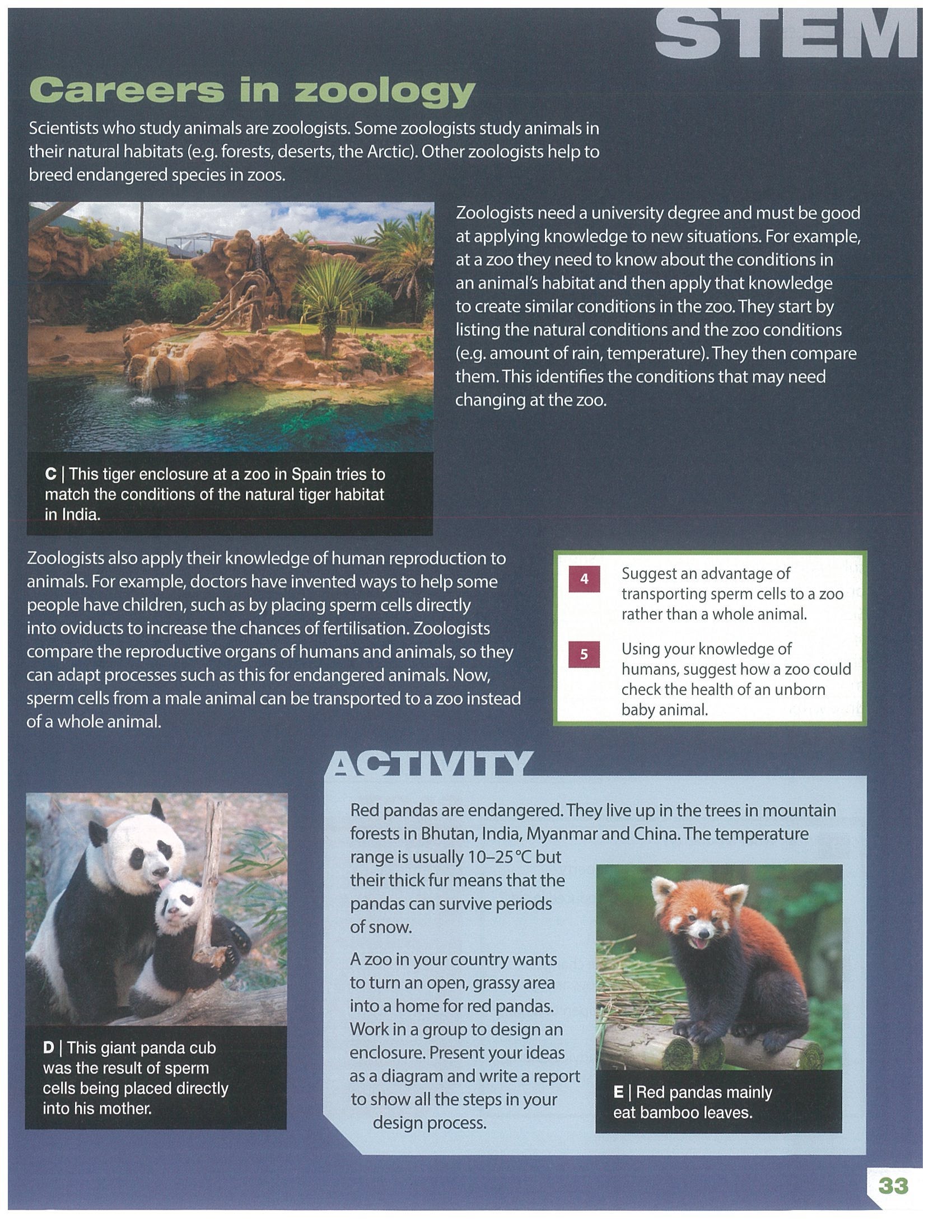
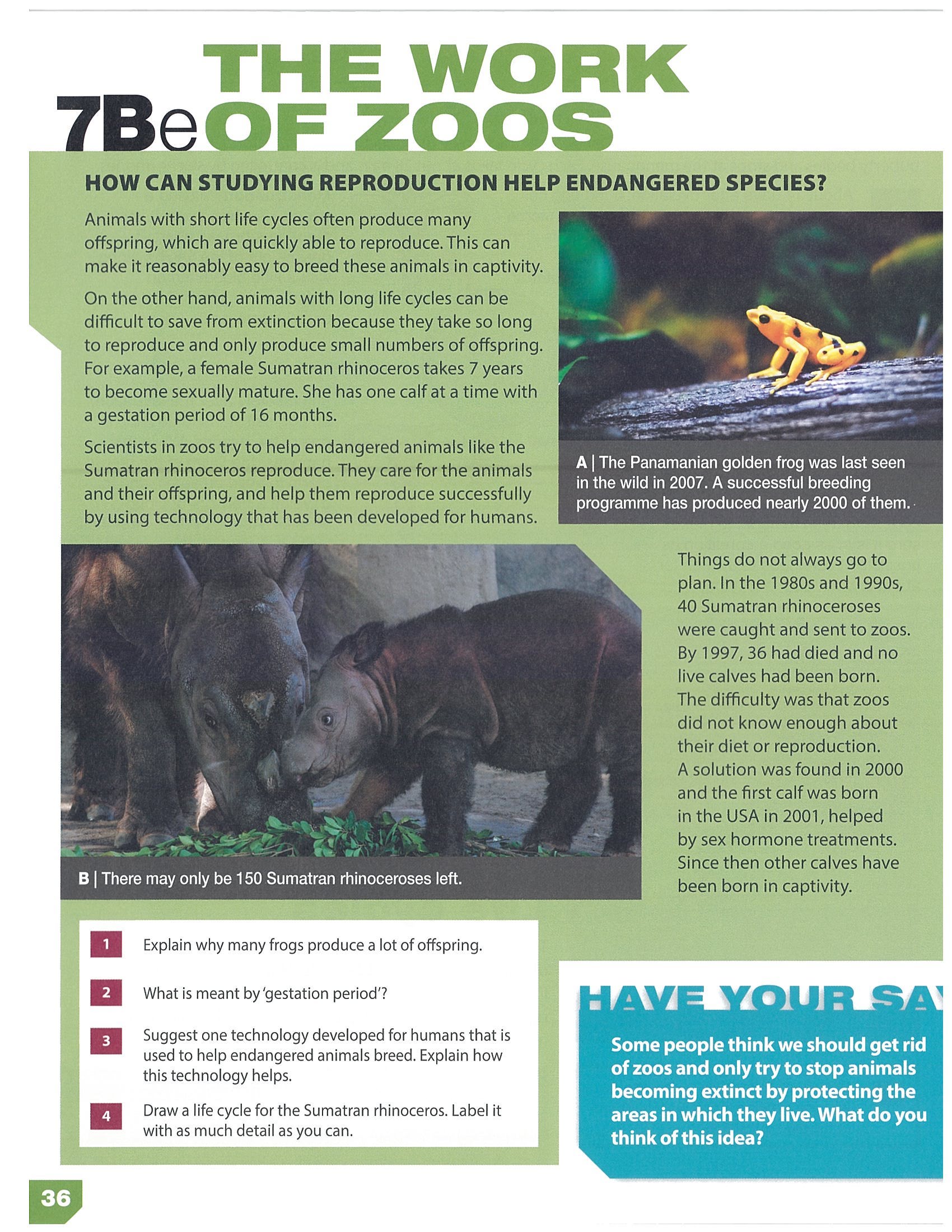
Endangered animals are those that are in danger of becoming extinct because there are very few left.
濒危(endangered)动物是因数量很少、有灭绝危险的动物。
Many zoos try to stop endangered animals becoming extinct by breeding the animals. It is hoped that the offspring can be released back into the wild.
很多动物园通过繁殖来防止濒危动物灭绝——希望后代(offspring)能被放归野外。
Animals living in zoos do not always mate successfully and sometimes their offspring die for unknown reasons. So it is important that scientists study sexual reproduction in different animals to work out how to help them breed.
动物园里的动物不一定能成功交配,后代有时也会因为未知原因死亡。所以科学家研究不同动物的有性生殖很重要——这样才能知道如何帮助它们繁殖。
FACT
FACT 框
Scientists from all over the world work together at the International Union for the Conservation of Nature and Natural Resources (IUCN) to publish a list of endangered organisms. It is called the 'Red List'. There are over 13 000 animals on this list.
全世界的科学家在世界自然保护联盟(IUCN)合作发布一份濒危生物名单——叫做"红色名录(Red List)",上面有超过 1.3 万种动物。
Gametes
配子
Sexual reproduction requires two individuals to produce new organisms of the same type.
有性生殖需要两个个体共同产生同种新生物。
Usually, two types of specialised cells are used. These are called sex cells or gametes.
通常需要两种特化细胞——叫性细胞(sex cells)配子(gametes)
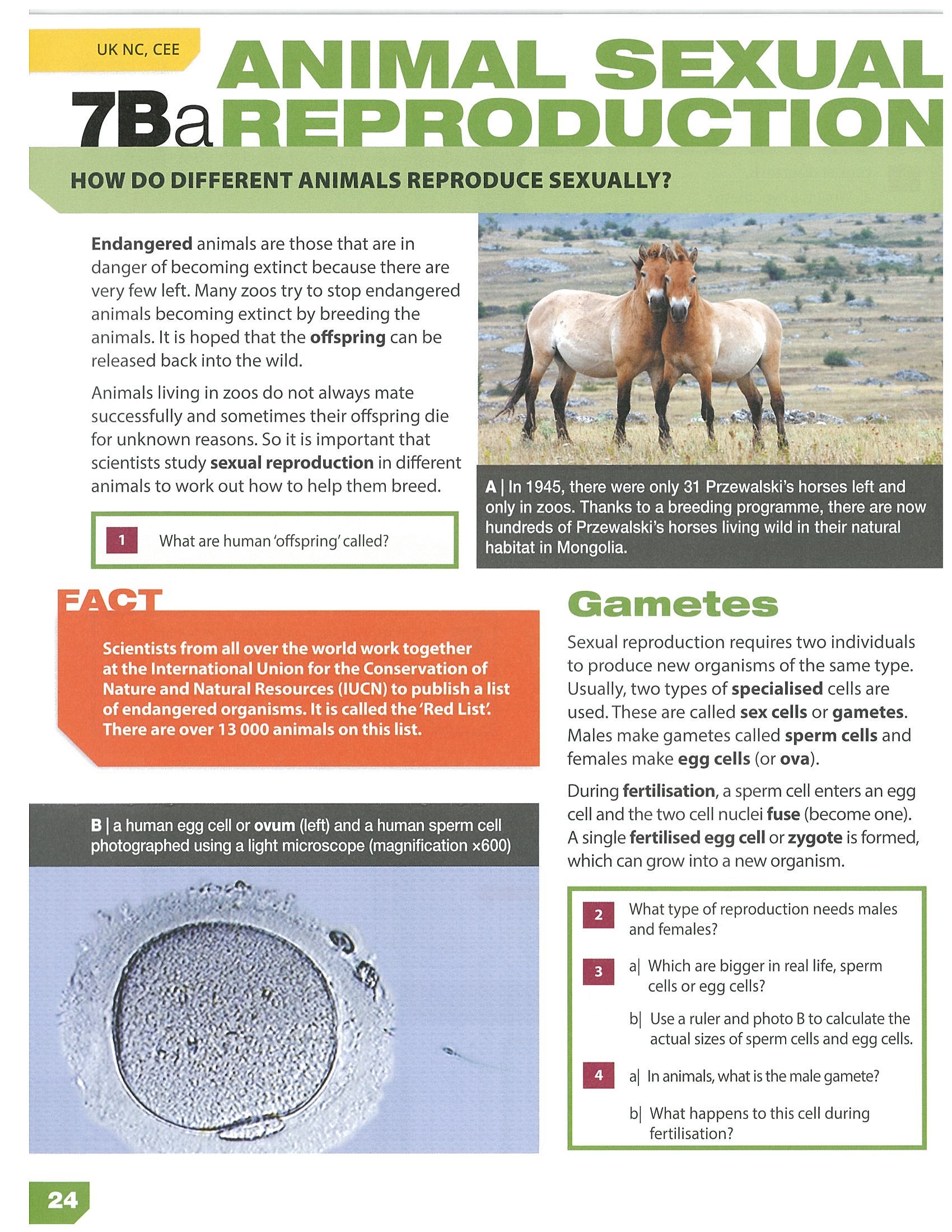
Males make gametes called sperm cells and females make egg cells (or ova).
雄性产生的配子叫精子(sperm cells),雌性产生的叫卵细胞(egg cells / ova)
During fertilisation, a sperm cell enters an egg cell and the two cell nuclei fuse (become one).
受精(fertilisation)过程中,一个精子进入卵细胞,两个细胞核融合(fuse)成一个。
A single fertilised egg cell or zygote is formed, which can grow into a new organism.
形成一个受精卵(叫做 zygote 合子),它能发育成新生物。
A | Prewalski's horses comeback
图 A | 普氏野马的回归
In 1945, there were only 31 Prewalski's horses left and only in zoos. Thanks to a breeding programme, there are now hundreds of Prewalski's horses living wild in their natural habitat in Mongolia.
1945 年世上只剩 31 匹普氏野马,且全部在动物园里。多亏了繁育计划,现在蒙古的自然栖息地有数百匹野生普氏野马。
Q1 What are human 'offspring' called?
第 1 题 人类的 offspring 叫什么?(答:儿女 / 子女 / 孩子——babies / children)
Q2 What type of reproduction needs males and females?
第 2 题 哪种生殖需要雌雄两性?(答:sexual reproduction 有性生殖
Q3 a) Which are bigger in real life, sperm cells or egg cells? b) Use a ruler and photo B to calculate the actual sizes.
第 3 题 a) 真实大小,精子和卵细胞哪个大?(答:卵细胞 egg cell 大很多) b) 用尺量图 B 并算出实际大小(量到的尺寸 ÷ 放大倍率 600)。
Q4 a) In animals, what is the male gamete? b) What happens to this cell during fertilisation?
第 4 题 a) 动物的雄性配子是什么?(答:精子 sperm cell) b) 受精时它怎么了?(答:进入卵细胞,细胞核与卵的核融合)

📄 教材 p.25 · 7Ba External + Internal Fertilisation

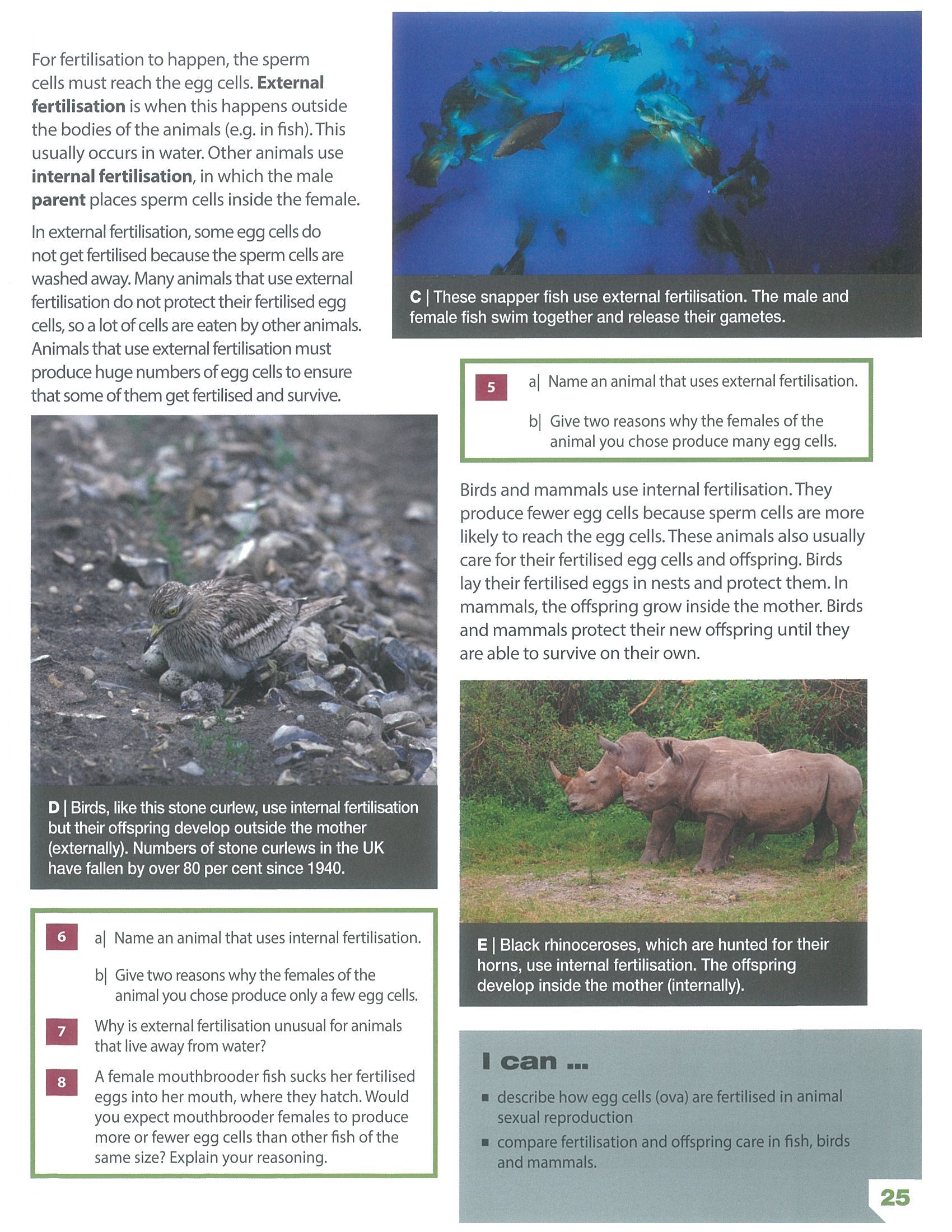
For fertilisation to happen, the sperm cells must reach the egg cells.
要发生受精,精子必须到达卵细胞。
External fertilisation is when this happens outside the bodies of the animals (e.g. in fish). This usually occurs in water.
体外受精(external fertilisation):在动物体外发生(比如鱼),通常发生在水中。
Other animals use internal fertilisation, in which the male parent places sperm cells inside the female.
其他动物用体内受精(internal fertilisation)——雄性亲本把精子放进雌性体内。
In external fertilisation, some egg cells do not get fertilised because the sperm cells are washed away. Many animals that use external fertilisation do not protect their fertilised egg cells, so a lot of cells are eaten by other animals.
体外受精时,一些卵不能受精——因为精子被水冲走。许多体外受精的动物也不保护受精卵,大量卵被其他动物吃掉。
Animals that use external fertilisation must produce huge numbers of egg cells to ensure that some of them get fertilised and survive.
所以体外受精的动物必须产大量卵——确保一些能受精并存活。
Birds and mammals use internal fertilisation. They produce fewer egg cells because sperm cells are more likely to reach the egg cells. These animals also usually care for their fertilised egg cells and offspring.
鸟类和哺乳动物用体内受精——产卵较少,因为精子更容易到达卵。这些动物通常也会照顾受精卵和后代。
Birds lay their fertilised eggs in nests and protect them. In mammals, the offspring grow inside the mother. Birds and mammals protect their new offspring until they are able to survive on their own.
鸟类把受精卵下在巢里并保护。哺乳动物的后代在母体内发育。鸟类和哺乳动物都会保护新生后代,直到它们能独立生存。
C | snapper fish — external fertilisation
图 C | 鲷鱼——体外受精
These snapper fish use external fertilisation. The male and female fish swim together and release their gametes.
鲷鱼用体外受精——雄鱼和雌鱼一起游动,同时把配子释放到水里。
D | stone curlew — internal fertilisation
图 D | 石鸻——体内受精
Birds, like this stone curlew, use internal fertilisation but their offspring develop outside the mother (externally). Numbers of stone curlews in the UK have fallen by over 80 per cent since 1940.
石鸻等鸟类用体内受精,但后代在母体发育(在蛋里)。英国的石鸻自 1940 年以来数量已下降超过 80%
E | Black rhinoceros
图 E | 黑犀牛
Black rhinoceroses, which are hunted for their horns, use internal fertilisation. The offspring develop inside the mother (internally).
黑犀牛因为犀角被猎杀。它们用体内受精,后代在母体内发育。
Q5 a) Name an animal that uses external fertilisation. b) Give two reasons why the females produce many egg cells.
第 5 题 a) 说出一种用体外受精的动物。(鱼 / 青蛙) b) 给两个理由说明为什么雌性产很多卵。(一部分被水冲走 / 一部分被吃掉 / 一部分受不了精)
Q6 a) Name an animal that uses internal fertilisation. b) Give two reasons why the females produce only a few egg cells.
第 6 题 a) 说出一种用体内受精的动物。(鸟 / 哺乳动物) b) 给两个理由说明为什么雌性只产少量卵。(精子更容易找到卵 / 母体保护卵和后代)
Q7 Why is external fertilisation unusual for animals that live away from water?
第 7 题 为什么远离水的动物很少用体外受精?(答:体外受精需要水让精子游到卵;陆地上精子干掉就不能受精)
Q8 A female mouthbrooder fish sucks her fertilised eggs into her mouth, where they hatch. Would you expect mouthbrooder females to produce more or fewer egg cells than other fish of the same size? Explain.
第 8 题 雌口孵鱼把受精卵吸进嘴里,让它们在嘴里孵化。和同样大小的其他鱼比,口孵鱼雌性会产更多还是更少卵?解释。(答:更少——因为母体保护卵,存活率高,不需要产那么多)
I can…
我能……
describe how egg cells (ova) are fertilised in animal sexual reproduction
描述动物有性生殖中卵细胞如何受精
compare fertilisation and offspring care in fish, birds and mammals
比较鱼、鸟、哺乳动物的受精方式和对后代的照顾

💡 7Ba 出现的 6 个核心英文术语 · 含音标 / 词性 / 词源 / 教材原句 / 现代延伸 / 易错。生物学术语用学术口吻。

🧬 繁殖大类

reproduction /ˌriːprəˈdʌkʃn/ n. 生殖、繁殖
词源拉丁 re-(再)+ producere(产出)= "再次产出"(产出新一代)
教材"sexual reproduction in animals"(动物的有性生殖)
延伸reproduce v. 繁殖、复制 ② reproduction of a painting 一幅画的复制品
同根produce v. 生产 · product n. 产品 · production n. 生产
sexual /ˈsekʃuəl/ adj. 有性的、性别的
词源拉丁 sexus(性别)→ 在生物学语境里指"涉及两性配子结合的"
教材"Sexual reproduction needs gametes from two parents."(有性生殖需要两个亲本的配子)
延伸sexual reproduction 有性生殖 ② sex cells = gametes 性细胞
课堂语境:科学课里 sexual 是中性学术词,指"有性的、涉及两个配子的",和日常情感用法无关。回答题目时按生物学定义即可。
asexual /eɪˈsekʃuəl/ adj. 无性的
词源希腊 a-(无、没有)+ sexual = "没有性别参与"
教材"Asexual reproduction needs only one parent."(无性生殖只需要一个亲本)
延伸① 细菌、酵母、草莓的匍匐茎都是无性生殖 ② 后代是亲本的 clone(克隆,基因相同)
sexual vs asexual:有性 → 两亲本 + 后代基因不同;无性 → 一亲本 + 后代基因相同(克隆)。考试常考。

🐣 后代 + 分类

offspring /ˈɒfsprɪŋ/ n. 后代、子女
词源古英语 of(从……出)+ spring(涌出)= "从父母身上涌出来的"
教材"care of offspring in fish, birds and mammals"(鱼、鸟、哺乳动物对后代的照顾)
延伸① 单复数同形:one offspring / many offspring ② 学术词;日常说话用 children / young / babies
不可数 + 单复数同形:写 "many offsprings" 是错的,应写 many offspring
species /ˈspiːʃiːz/ n. 物种
词源拉丁 species(外貌、种类)→ 现代生物学里指"能互相交配产生可育后代的一群生物"
教材"Red pandas are an endangered species."(小熊猫是濒危物种)
延伸endangered species 濒危物种 ② The Origin of Species 达尔文《物种起源》
单复数同形:one species / two species 都对。写 "specieses" 是错的。
mammal /ˈmæml/ n. 哺乳动物
词源拉丁 mamma(乳房)+ -al = "有乳房的、会哺乳的"
教材"In mammals, fertilisation happens inside the body."(哺乳动物体内受精)
延伸mammary gland 乳腺 ② 哺乳动物特征:体内受精 + 胎生 + 哺乳 + 恒温 + 有毛
同类词fish 鱼 · bird 鸟 · reptile 爬行 · amphibian 两栖 · insect 昆虫
💡 Workbook 题 — 考试格式训练。先自己默做,再点 "▶ 查看答案 + 讲解"。错的自动进错题本

📄 Workbook p.17 · 7Ba Escaped Zoo Animals

Q1 [Suggest · 2 reasons] WB p.17
Suggest two reasons why rare animals are kept in zoos.
i. ii.
Q2 [Explain · why] WB p.17
Why do you think there are not large numbers of Canadian lynx in Devon, even though one escaped?
Q3 [Evaluate evidence · MCQ] WB p.17
Which is the best evidence that wild wallabies live on the Isle of Man? Tick (✓) one box.

Why this choice?

Q4 [Suggest · 2 similarities] WB p.17
Wallabies and cats are both mammals. Suggest two ways in which you would expect their reproduction to be similar.
i. ii.
Q5 [MCQ · 1 mark] WB p.17
Ovaries are part of the female reproductive system. They contain different types of cells, including egg cells. Which best describes an ovary? Tick (✓) one box.

📄 Workbook p.20 · 7Ba Animal Sexual Reproduction

Q1 [Vocab match · 5 parts] WB p.20
Use words from the box. You may use each word more than once.

egg cell · gamete · sperm cell · zygote

a) A scientific word that means a sex cell:

b) The meaning of the word ovum:

c) A male sex cell of an animal:

d) A female sex cell of an animal:

e) A scientific word that means a fertilised egg cell:

Q3a [Name] WB p.20
Name an animal that uses internal fertilisation.
Q3b [Suggest · 2 reasons] WB p.20
Give two reasons why the females of this animal produce only a few egg cells.
i. ii.
Q4 [Predict + explain] WB p.20
A female mouthbrooder fish sucks her fertilised eggs into her mouth, where they hatch. Would you expect mouthbrooder females to produce more or fewer egg cells than other fish of the same size? Explain.

I would expect mouthbrooder females to produce eggs because:

🎯 隐性技能专项 · 考试不教但必丢分的能力

💡 点卡片翻面看答案。本章 25 个高频术语(生殖术语特别多),考试拼写错就直接丢分。

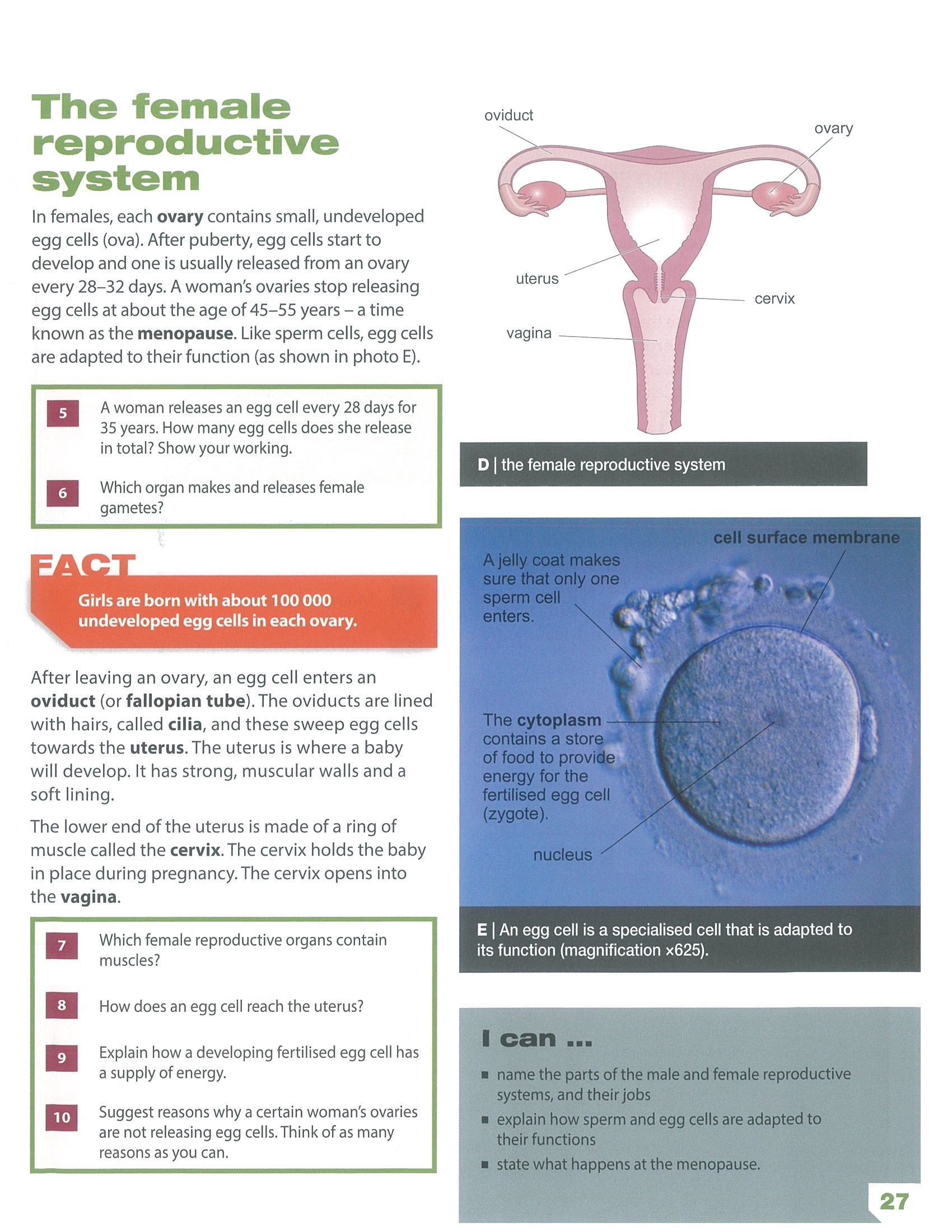
💡 玩法:先点一个英文标签(变金色高亮),再点正确的器官位置即可放入。点已放好的部位会取回标签。本图是女性生殖系统——SUIS 考试这种 label diagram 是必出题型。

女性生殖系统(示意) 点这里 点这里 点这里 点这里 点这里

把这些标签点到正确位置:

uterus
ovary
oviduct
cervix
vagina
bladder
testis
urethra

💡 注意:bank 里有 8 个标签,但图上只有 5 个空——多出来的是干扰项(bladder 不属于生殖系统、testis/urethra 属于男性)。考试也是这样。

💡 看清楚题干用的指令词,答题方式完全不同。

指令词 要求 错误示范 正确示范
State 用一个完整句子说清事实 "control"(光这一个词不行) "The control variable is the temperature of the water."
Name 给一个单词或短语即可 "the heart"(前面冠词常加分) "heart" 或 "the heart"
List 给几个项目(数字明示) 只写 1 个但题目问 3 个 分行写出确切数目,编号 i, ii, iii
Describe 说出"是什么样",需要细节 "It's an organ."(太短) "The heart is a muscular organ that pumps blood around the body."
Explain 必须说"为什么",要有 because "It's important." 没说为什么 "This is important because blood carries oxygen to cells."
Suggest 给合理猜测(题目没标准答案) 留白不写 大胆给一个有逻辑的回答,写完整句子
Compare 同时说相同点和不同点 只说不同点 "Both X and Y have...; however, X has..., whereas Y has..."
Tick / Choose 勾选一个或多个框 选了 2 个但题目说 one box 仔细看 "Tick (✓) one box" / "two boxes"
📌 实战提示:考试翻到一题,先圈出指令词(state / explain / suggest...),再答题。这一步能让你少丢 5–10 分。

📝 分级练习 · 由易到难闯关

❌ 错题本 · 自动收集你标错的题

还没有错题。做题时点击"做错了"会自动收集到这里。

✅ 考前自检清单 · 全勾上才能进考场

已掌握 0 / 0
本地学习样稿 · 数据自动保存在浏览器(localStorage)· 关掉重开数据还在